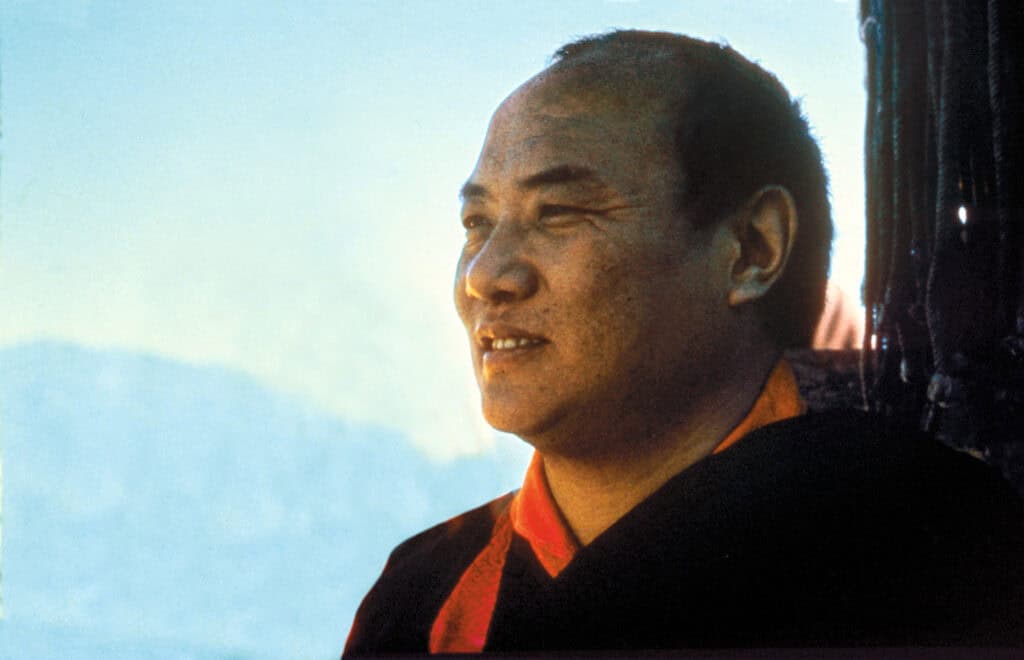
Since 1972, Lama Ole Nydahl, along with his wife Hannah up until her death in 2007, has worked ceaselessly and joyfully to fulfill his promise to his teacher, the 16th Gyalwa Karmapa, to bring Diamond Way (Skt. Vajrayana) Buddhism to the West. He and Hannah began accompanying the 16th Karmapa and other Rinpoches on teaching tours in Europe and North America in the 1970s; inviting them, driving them from town to town, and organizing events, until eventually it was Lama Ole himself who was giving the teachings and courses. Lama Ole has taught Buddhism all over the world and established over six hundred Buddhist centers in more than fifty countries.
Lama Ole and Hannah’s journey from being hippies in 1960s Denmark to Buddhist lamas is a story of heroic perseverance. Their willingness to keep working with inspiration, humor and joy in order to help people and bring meaning to their lives is an inspiration to many. They have devoted their lives to sharing the dharma. In the early 1970s, they would work nights cleaning schools or take odd jobs for cash during the day and then drive to towns and cities around Europe to give lectures in the evenings. Early on, a small group might show up to listen to Lama Ole, but this never discouraged them from returning. Eventually, there was enough interest and idealism that people would organize the lectures and courses for them, and then, hundreds and eventually thousands of people started to attend.
The breadth and intensity of Hannah and Lama Ole’s dharma activity has been simply massive. For Lama Ole, it has ranged from giving countless lectures and courses about Buddhism to establishing city centers and retreat centers to building stupas (stupas are a representation of the enlightened mind) in Europe to authoring nine books that have been translated into many languages, to giving hundreds of interviews for newspaper articles and television shows, to receiving the highest honors as a Buddhist lama in Bodhgaya, and much more. Hannah’s activity included guiding the translation of many Buddhist teachings and meditation texts into Western languages, supporting the work of Tibetan rinpoches in the West, overseeing exhibitions of Tibetan art across Europe and beyond, and directing the development of programs of study of Buddhist teachings. For decades, motivated by intense compassion and the wish to bring these enlightened methods to their many students around the world, they worked almost non-stop and had a grueling schedule–often getting only a few hours of sleep per night.

A very important aspect of Lama Ole’s activity has been traveling to meet his students and establish Buddhist centers, places where people can learn about Buddhism and meditate together, now and for many years into the future. Many of his students traveled with him. He did this with indefatigable strength for years, living out of a few suitcases. (In the meantime, Hannah often traveled with Tibetan lamas and would join him for half the year when she could.) Lama Ole expects his students to gain some experience of the world, and traveling with him, whether it is through a peaceful pureland like Bhutan, the freezing Siberian tundra, or through jeopardous areas of South America, has been an important method to learn from the example of the teacher and to see his wisdom in action. Like Marpa Lotsawa,1 who traveled back and forth over the Himalayas in very dangerous and primitive conditions, Ole and Hannah were fearless in their travels. They crossed the Iron Curtain to bring the dharma to Poland and Czechoslovakia in the 1970s, to Israel during periods of unrest, to Russia in the 1980s, and to Colombia during its most dangerous years (even surviving a kidnapping as described in his book Riding the Tiger). As it says in the bodhisattva (Engl. mind of awakening)2 promise, they worked with “unending diligence and strength” to help beings out of suffering. Now, Lama Ole’s students in the worldwide sangha honor his legacy and travel together, visiting and inspiring each other.
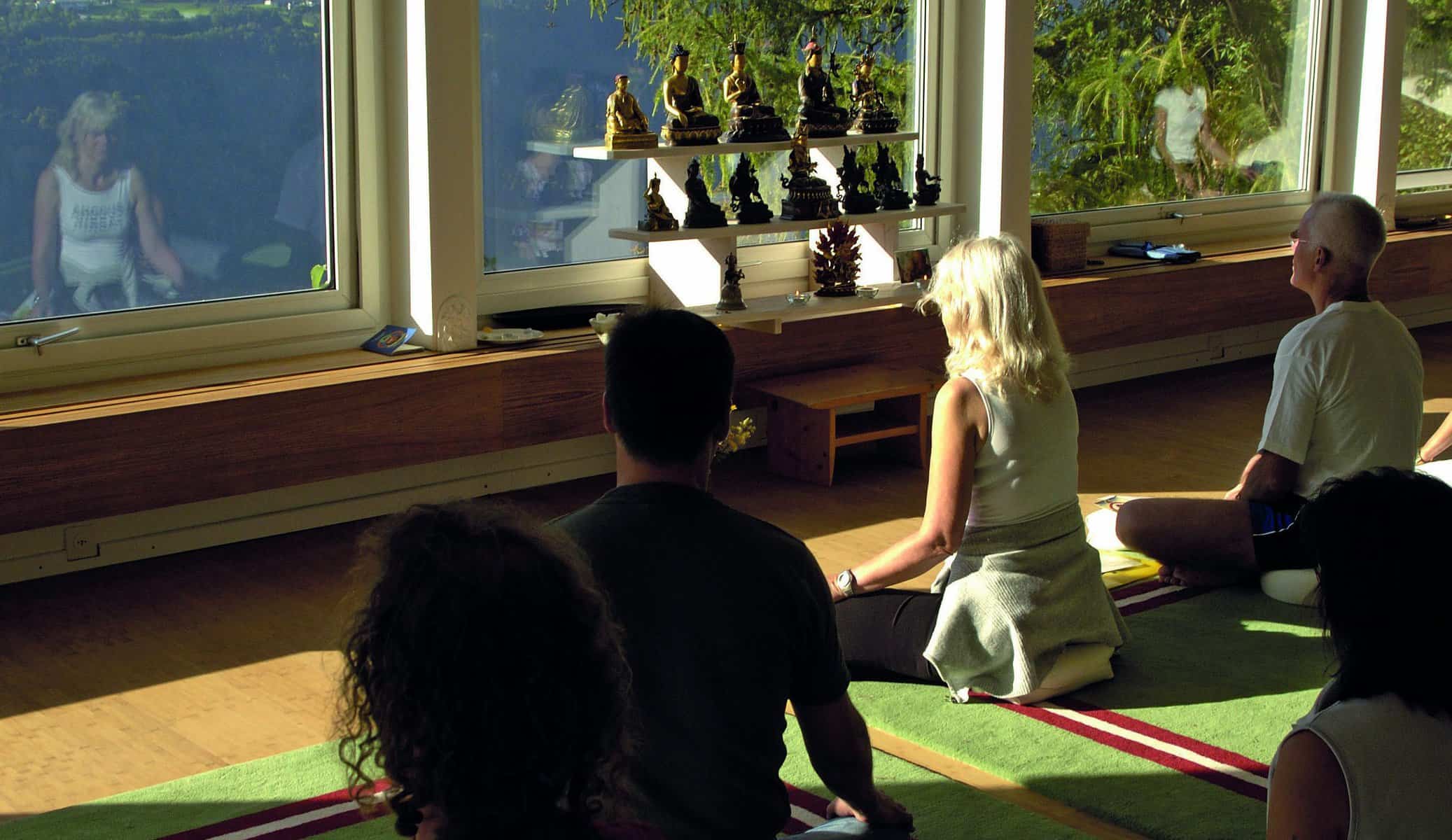
When Buddhism came to Tibet from India, it was integrated into Tibetan culture. Marpa Lotsawa brought Buddhism to Tibet in this manner; not just by bringing or translating the texts, but also by assimilating the teachings into Tibetan culture. One of the major accomplishments of Lama Ole and Hannah was to act as the Marpas of our time and bring Buddhism into Western culture. Buddhism is like an unchanging diamond that shows the color of whichever cultural cloth it is placed over, and so one of the tasks of Lama Ole and Hannah was to separate the Tibetan cultural elements from the timeless methods they had learned for working with their minds. This separation was crucial and needed to be done with wisdom, as the Buddhist teachings on mind and how to work with it could not be diluted or altered. As part of this process, Hannah guided the translation of the texts for the refuge and the preliminary practices (Tib. Ngöndro) into Western languages, and this allowed people to understand the meaning of the practices. They worked to develop an accessible approach to using Diamond Way methods in Western societies. This included keeping a Western aesthetic in the appearance of the meditation rooms and centers. Lama Ole and Hannah also ensured that Western cultural standards around the freedom of women were maintained in Diamond Way centers. Lama Ole’s approach provides methods that can be woven into the everyday life of lay people who have jobs and families and are active in society—something which is not possible with the monastic style of Buddhism.
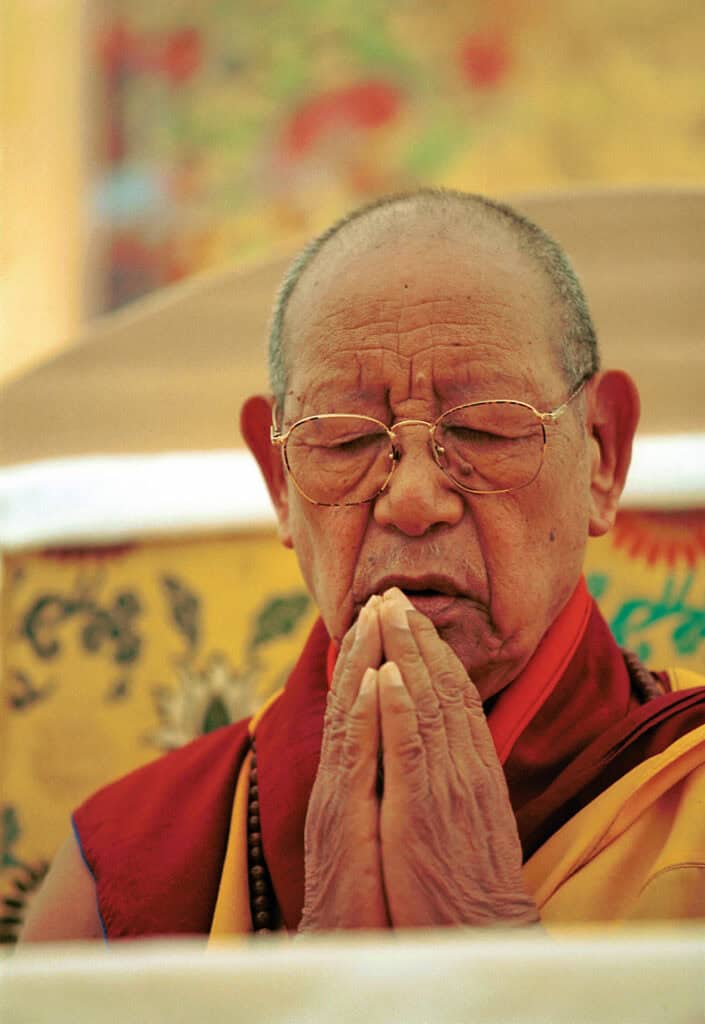
Lama Ole very faithfully follows the Karma Kagyu lineage under Karmapa and shares only the teachings on mind and methods that were passed down to him from his teachers. The meditation practice that is used in all of his Buddhist centers around the world on a daily basis is the meditation on the 16th Karmapa. The 16th Karmapa made Lama Ole and Hannah the holders of the meditation in the late 1960s and asked them to keep it fresh and on the cutting edge of Western minds, so the focus of the meditation has shifted several times. For other teachings and meditations he passes on, the terminology sometimes changed with improvements to translations and so on, but the content remained the same. These methods are all part of this lineage, as well as the yidam (Engl. mind bond) practices and the blessings he has given for many years. Lama Ole also gave phowa, a meditation practice to teach people how to die consciously, about ten times a year for twenty-seven years, and gave refuge to thousands, many of whom began working with meditation methods. Over the years, he taught alongside Tibetan rinpoches and the 17th Karmapa on many occasions, who also provided teachings and initiations.
To preserve this precious transmission and to protect these decades of work sharing the dharma, Lama Ole established an organizational structure that is based on friendship and generosity. The work is funded using a grassroots approach rather than relying on a small number of wealthy donors; many sangha members make voluntary contributions. Every member contributes their time freely, with no paid employees anywhere in the organization. While this approach has its drawbacks (it’s sometimes difficult to find enough volunteers for everything), it keeps things fresh and prevents the development of hierarchies and overly bureaucratic structures.
This issue of Buddhism Today may provide a small taste of the enormous reach and depth of Lama Ole and Hannah’s bodhisattva activity in bringing Diamond Way Buddhism to the West. Their inspiration continues to reverberate and encourage practitioners everywhere.