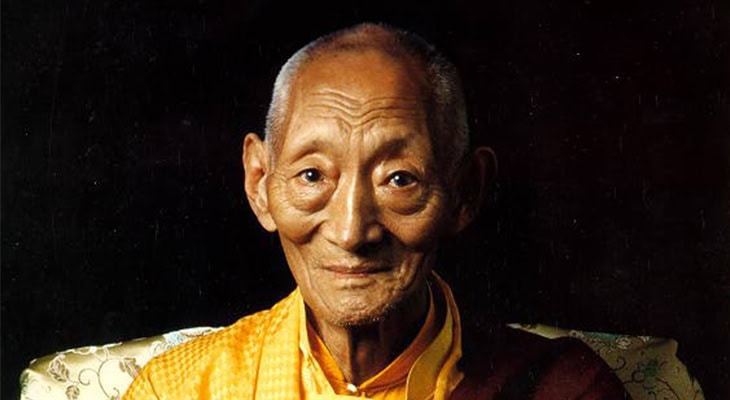
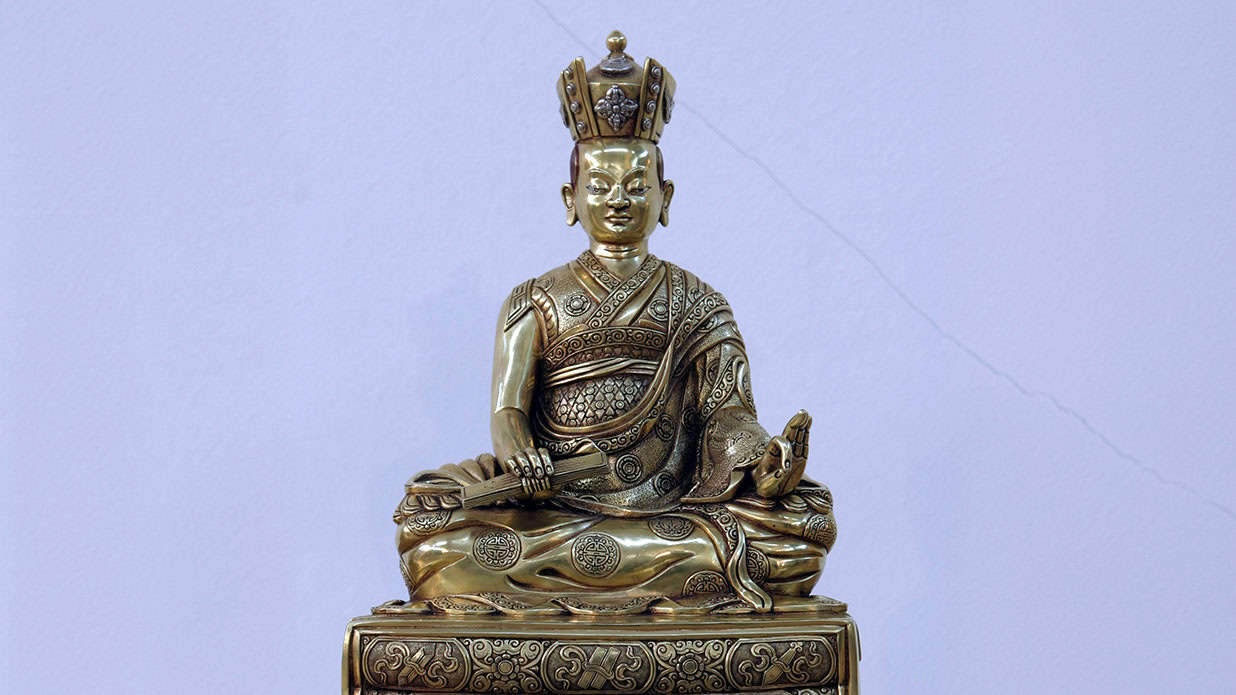
When a young Danish couple from Copenhagen´s hippie community, Ole and Hannah Nydahl, left for their honeymoon to Nepal in 1968, they never imagined that this trip would change their lives for good, as well as the lives of tens of thousands of others. Their unexpected meeting in Kathmandu with a highly realized meditation master, Lopön Tsechu Rinpoche, spontaneously revealed to them mind´s hidden capacities. Their deep wish to meet Tsechu Rinpoche again and their search for him led the couple to meet the most powerful yogi of Tibetan Buddhism and head of the Karma Kagyu tradition, His Holiness the 16th Gyalwa Karmapa, Rangjung Rigpe Dorje (1924-1981), the following year. This life-changing encounter with a living buddha was the beginning of a development rooted in Ole and Hannah´s marriage, but soon it grew into a much larger, beyond personal activity: bringing the Karma Kagyu transmission of Tibetan Buddhism to the West.
Ole and Hannah became the first Western disciples of the great 16th Karmapa, and they stayed with him in the East for three years, eager to learn and experience everything that he embodied. The Karmapa constantly manifested the immense bliss and freedom of a fully enlightened mind, and showed Ole and Hannah the way that they also could realize mind´s nature. In 1972, after learning from other high lamas of the Kagyu lineage, the 16th Karmapa instructed Hannah and Ole to go back to Europe to share everything that they had learned and experienced about Buddhism with their friends. Karmapa gave them two small buddha statues before they returned home as symbols of Buddhism coming to the West. He also gave them a Tibetan scroll painting (Tib. thangka) depicting three buddha forms: Loving Eyes (Tib. Chenrezig), the Glorious One with Gentle Speech (Skt. Manjushri) and Diamond in Hand (Tib. Chana Dorje, Skt. Vajrapani). These buddha forms represent compassion, wisdom and strength, which Karmapa told them they would need for their work in the West.
Ole and Hannah returned to Copenhagen in the autumn of 1972, and their activity quickly grew, as there was a general openness in Western societies for new ways of perceiving the world at that time. At the beginning, Ole and Hannah got a small apartment in Princessegade, near Copenhagen’s famous hippie quarter, Christiania. At first, it was their old hippie friends who came to get Buddhist teachings about the nature of mind.
Shortly after their return, Hannah and Ole were offered an opportunity to present Buddhism at the “Inner Universe” exhibition organized by a professor. The exhibition provided a platform for all the spiritual movements and schools that were new to Denmark, mostly from the East. The professor also helped Ole and Hannah to find a new place in downtown Copenhagen, in a basement room in Skindergade, which became the first established Buddhist center in the West. Skindergade is centrally located in Copenhagen, and at that time, it was a place frequented by spiritual seekers. The center was decorated in the traditional Tibetan style. (It was years later that Hannah and Ole consciously decided to separate Tibetan cultural elements from the essence of Buddha´s timeless teachings and adopt a Western-style in their centers. They also translated the meditation texts into Western languages instead of chanting them in Tibetan so that the teachings and meditations could be understood by everybody.)
In October 1973, the Danish Prince Peter invited the Dalai Lama to visit Denmark, his first tour in the West. He held a public talk at the Danish National Museum and also visited and inaugurated the Buddhist center in Skindergade, which he named Karma Drub Djuling—it was the same name that the 16th Karmapa would give it when he would visit for the first time a year later.
In June 1974, another great Tibetan Buddhist meditation master of the Karma Kagyu lineage, Kalu Rinpoche, visited and blessed the Skindergade Center. This visit set the direction and prepared the locals for the visit of the 16th Karmapa, who came to Copenhagen for the first time in December 1974. During his visit, he instructed Ole and Hannah to find another place for the center. While initially not too keen on finding a new place—since the one in Skindergade was free, centrally located, and had been carefully decorated—shortly after the Karmapa’s visit, it was flooded with sewage, and Ole and Hannah were then forced to start looking for a new location.
In the summer of 1975, they purchased a villa at Svanemøllevej 56, which has functioned as a Buddhist center ever since. The street itself is in one of the finest (and most expensive) areas of Copenhagen, just north of the city center and close to the sea. This area is also called the embassy quarter. Luckily, in the mid-1970s, property prices were very low, so Ole, Hannah, and some other idealistic friends put their money together and bought this villa.
Ole and Hannah already had some connection to this villa. In the 1960s, an American literature professor from the University of Copenhagen had arranged a meeting for his students in this house, including Ole, who was then a young university student. Lama Ole says that when he was leaving the house, he had a clear idea come to mind: “One day, we will do something very meaningful here!” At that time, it did not make much sense to him, but when they found the house again, he remembered this event, and suddenly, the meaning became clear. Another event pointing to the future importance of this place was when the 16th Karmapa drove through this area during his first visit to Copenhagen. When they were passing the house, he suddenly asked the driver to stop. He told Ole that if this house was for sale, they should buy it. Shortly after the Karmapa´s visit, the villa was put up for sale, so Ole and Hannah had no doubt that they had to get the place.
Right after buying the house, Ole, Hannah, and their friends started to renovate it and turn it into a meditation center. From the beginning, the center has functioned as a Buddhist community, with friends living there and voluntarily supporting the place. The living room and study were turned into a meditation hall (Tib. gompa). In early 1976, the 16th Karmapa sent his favorite painter, Lama Rindzin Ladipa, from Sikkim to Copenhagen to decorate the gompa and the front hall in the traditional Tibetan style. Lama Ladipa died in the spring of 1977, so his main student Norbu, continued the work, both in the gompa and in the front hall. Between 1984 and 1985, Norbu painted the mandala of the Buddha Diamond Mind on the ceiling, as well as other buddha aspects and some mythical animals in the front hall. His latest work in the Copenhagen center, from 2008 to 2009, was the big scroll painting (Tib. thangka) of Dewachen (the Pure Land of Buddha of Limitless Light (Skt. Amitabha, Tib. Öpagme), also in the front hall. Norbu also decorated the Mahakala room of the retreat center in Lolland in the south of Denmark with very fine paintings.
Following Tibetan tradition, in the meditation hall, there is a painting of the historical Buddha Shakyamuni. There is also a painting of the main teachers and holders of the Karma Kagyu lineage, with the 8th Karmapa in the middle, pictures of our main yidams (buddha aspects of energy and light), a picture of the protector of our lineage, Mahakala, and other buddha forms. The altar is built in a traditional style and painted with red and gold. On the altar, we find Buddha Shakyamuni´s teachings, some of them in the form of Tibetan books (not the entire collection of the Buddha’s teachings, however). There are symbolic offerings and statues of our main lamas, yidams, and bodhisattvas on the altar, many of them gifts dating back to the very early days when Buddhism was arriving in the West. There are also some relic boxes (Tib. gaos) in the altar. You can read more about the paintings of the Copenhagen Center in Copenhagen’s Buddhas—Tibetan Buddhism and the Precious Painting Art of the Copenhagen Buddhist Center (Sungraph Publishing, 2014).
The Copenhagen center and the Danish retreat center in Lolland (which was bought in 1977) are unusual for Diamond Way Buddhist centers because they still have a distinct Tibetan style. Thus, both places remind us of the roots of Diamond Way Buddhism. They are also the only two centers in the world where the 16th Karmapa stayed and which still function as Diamond Way Buddhist centers today.
The Copenhagen Center is special because it is a historical place in Western Buddhism. Many of the highest lamas of the Karma Kagyu lineage and other lineages have visited or stayed in the center, and they have given teachings, empowerments, blessings, and meditated there. Over the last five decades, the 16th and 17th Karmapas, Shamar Rinpoche, Lopön Tsechu Rinpoche, Sherab Gyaltsen Rinpoche, Jigme Rinpoche, Mipham Rinpoche, Beru Kyentse Rinpoche, Shangpa Rinpoche, Tenga Rinpoche, Jamgon Kongtrul Rinpoche, Situ Rinpoche (in the early days) and many other lamas have been here. The Dalai Lama of the Gelugpa lineage (in the early days of the center), as well as Dilgo Khyentse Rinpoche of the Nyingma lineage, also visited the center in Svanemøllevej. The blessing of these lamas can still be felt strongly today. There have been countless Buddhist meditation courses, public lectures, weddings, and even funerals at the Copenhagen Center, which has provided a place for many practitioners to meditate and develop their minds with the powerful methods of the Diamond Way.
As their activity spread rapidly around the world and Diamond Way Buddhism became more and more international, Lama Ole and Hannah kept the Copenhagen center as their base. When Hannah found out in late 2006 that she was sick with cancer, they decided to spend the last months of her life in the Copenhagen center, where she passed away in April 2007. Hannah´s ashes have been kept there in an urn for years. In the autumn of 2021, a separate room was established in memory of Hannah next to Karmapa´s room on the first floor, under the big thangka of Dewachen in the hall. In this room, there is an altar with a beautiful White Tara statue and miniature statues of White Tara (Tib. tsa-tsas from the Skt. saccha), and Lama Ole filled two vases (Tib. bumpas) with some of Hannah´s ashes, relics, as well as precious stones. These are also kept in the altar, and the room is open for visitors.
Svanemøllevej 56 has a nice living room, a library, and a dharma shop (a shop for books and meditation supplies), which is run by active members of the sangha. There is public meditation every evening in the center, along with regular talks on different Buddhist topics. There are also weekend courses with various traveling teachers, and the center has been offering introductory lectures to school groups since the 1980s. Aside from the main house, the villa next door at Svanemøllevej 54 is also part of the Copenhagen center. This villa was bought in 1990. In 2005, number 52 was also purchased, but this part of the Buddhist center was sold again in 2019. In the last ten years, the Copenhagen sangha has become very international, and people from almost every continent have lived here for shorter or longer periods. Lama Ole talks about the Copenhagen center often, and many friends come from all over the world to visit and receive the blessing of this powerful and historical place.
In early 2018, Lama Ole decided that the conditions were right for building a stupa in Copenhagen. A stupa is a Buddhist monument containing precious Buddhist relics. It symbolizes the whole Buddhist path and the fully developed, enlightened mind of the Buddha. It is very beneficial for one´s practice to participate in building a stupa, circumambulating it, making wishes, and meditating nearby. There are different types of stupas, representing special events in the historical Buddha Shakyamuni´s life. The victory stupa is connected to an event when Buddha Shakyamuni prolonged his life for three months at the request of his students. Thus, the victory stupa has a particularly beneficial effect, prolonging our life span. The preparations for the construction began immediately after Lama Ole´s decision to build the stupa in Copenhagen, boosting the activity of the center, and the Danish and international sanghas. The Victory Stupa of Copenhagen was inaugurated by Sherab Gyaltsen Rinpoche in July 2019, with the participation of Lama Ole and around three thousand friends from all over the world. It was dedicated to the long life and good health of Lama Ole. The stupa has been the shining crown of the Copenhagen center, at the core of Denmark´s capital city, since then.
Due to Lama Ole and Hannah´s tireless activity over the past fifty years, Diamond Way Buddhism has become well-established in Western societies. Today there are more than six hundred Diamond Way meditation centers around the world, and Copenhagen is the “mother” of them all. It is from here that Lama Ole and Hannah’s activity spread throughout the world. It is really the physical root of Diamond Way Buddhism in the West and the living heart of Lama Ole and Hanna´s work.