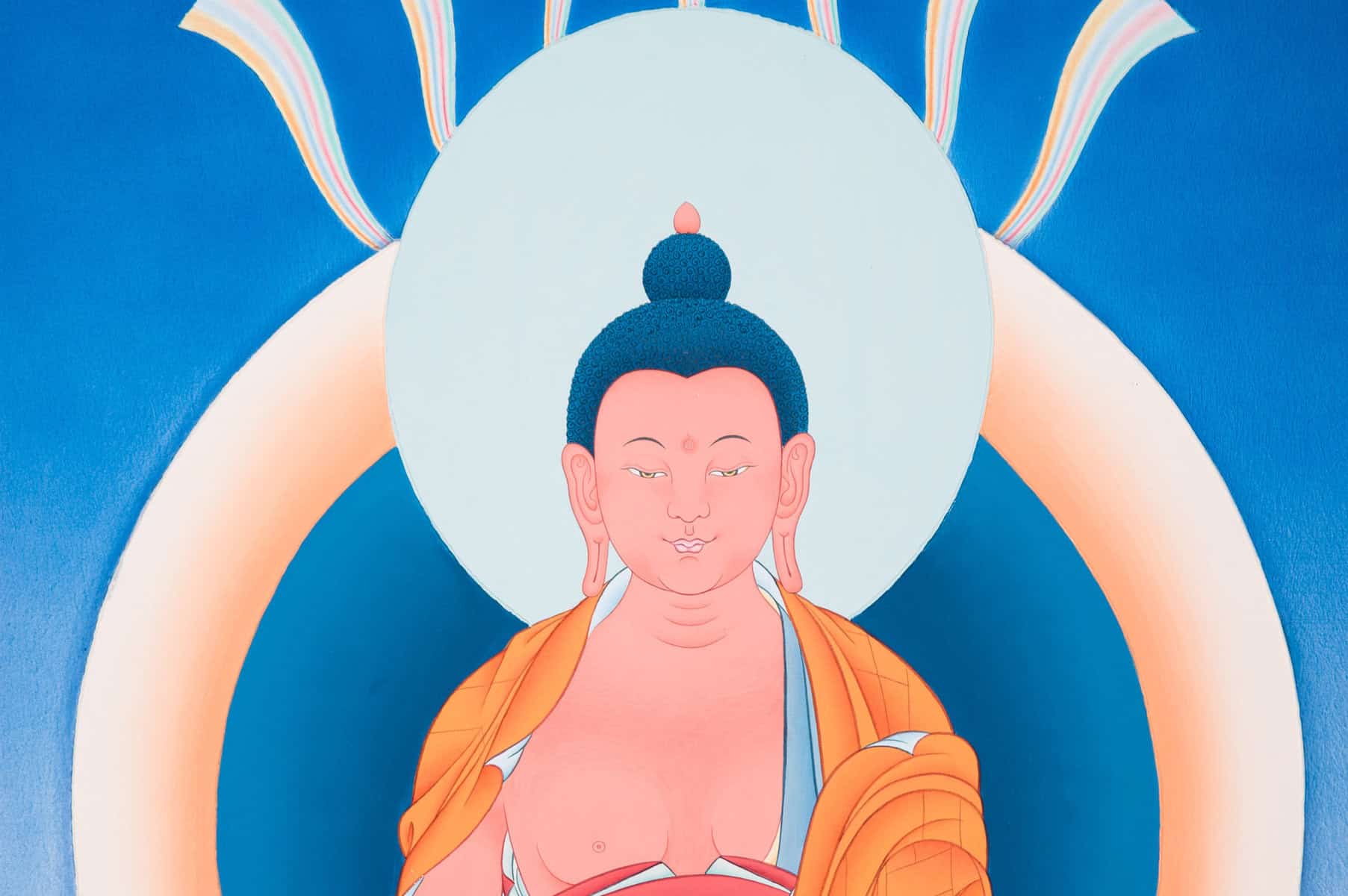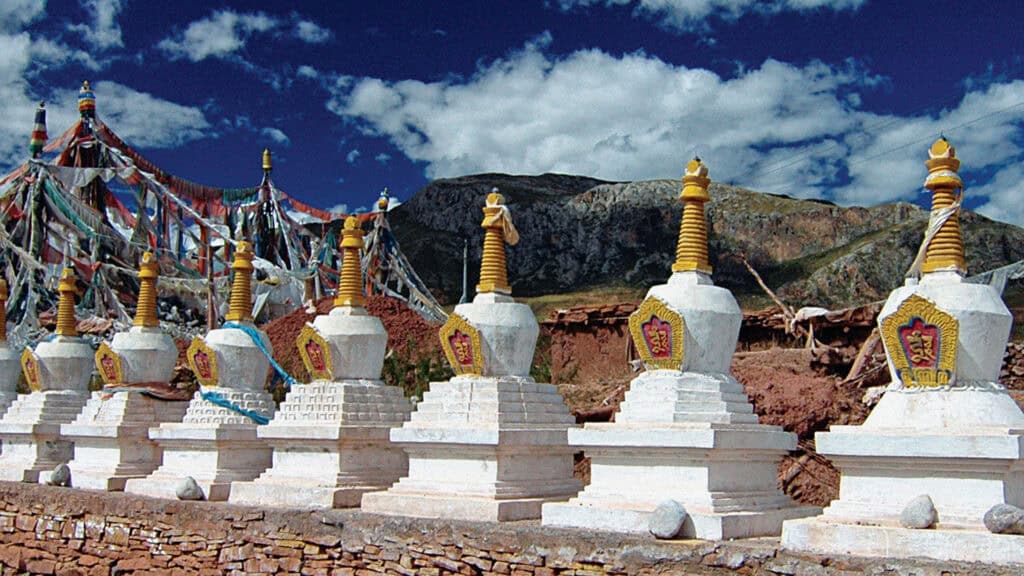
Very early in the history of Buddhism, Tibet received some Buddhist influences indirectly, through the people who traveled there to trade in the region. The Tibetans used to trade by going down south to Kalimpong, and from there, some also traveled into China. Some traveled via the north on the Silk Route that Marco Polo had used. Until Islam came, there was also contact with the Buddhist cultures that had been in what is now Afghanistan and Pakistan.
Originally, the Tibetans were what you would call Bönpos, or we would call them shamanists. Bön, or shamanism, was a way of controlling and working with power. For instance, they would make certain sounds to stop rainstorms, concentrate in a certain way to remove diseases, kill some animals to pacify spirits that felt disturbed, and so on. So, those Buddhist influences that had reached Tibet through trade by about 600 CE brought about the splitting of Bön or shamanism into two different types: one that is called Bön-kar, which is white Bön, and one that is called Bön-nak, which is black Bön. In white Bön, they incorporated the principle of enlightenment while black Bön was mainly offerings of animals, nature, magic, and things like that. Today, many Tibetans—for instance, the Dalai Lama—include the Bön when they refer to five Buddhist schools. One of these schools is Bön. This is because, even though their buddha isn’t called Sangye, but Shenrap, and they have some slightly different images and so on, it’s still very Buddhist. White Bön is actually very Buddhist.
During that time, Tibet also went through a period of development from being a lot of little kingdoms, or a lot of little groups, into becoming one central kingdom. At least, that was the case in Central Tibet. Central Tibet is one big plateau where you can ride anywhere, which you can control very easily, and where the people are not so fierce or individualistic. So, all these little kingdoms in Central Tibet consolidated at that time and came under one king. There were several really big kings like Songtsen Gampo and Trisong Detsen. (Eastern Tibet, however, stayed as many small kingdoms. It’s more mountainous and has more fierce, independent, and individualistic people. Eastern Tibet stayed separated into different kingdoms like Nangchen, Dokham, and Kham.) At that point, Central Tibet sent one hundred-eight people over the Himalayas in order to find an alphabet that they could use for their language. This wasn’t easy at all because Tibetan and Burmese are one unique and isolated language family. They had to find a way of writing, though; it would be very useful. So, one hundred eight young men were sent out over the mountains to go down and look in India and Nepal for a suitable alphabet. (As far as I know, out of the one hundred eight, only eight survived and came back. So that also tells us a little bit about how tough it was to travel at that time. There were thieves, robbers, and tigers; it wasn’t all that pointy-nosed bureaucrats like now who don’t want to give visas. At that time, it was more lively; the dangers were closer to life, right?) This meant that when Buddhism really started to arrive in Tibet, they already had a method for written communication, and there were people who could write. There were a few texts that had already been written in Tibetan.
If we look at the first big push of Tibetan Buddhism into Tibet, we see that it first started around 741 CE and lasted until 746 CE. These were five very special years when the cultural hero called Guru Rinpoche had been invited to come, and he walked over the Himalayas to Tibet. He started a place called Samye. He also started the first school of Buddhism there, which is called “the old style ones” or the Nyingmapas.
Actually, we think of him as the first, but when Guru Rinpoche arrived in Tibet, there were already some monks there. One of them was called Khenpo Bodhisattva, and the other one was called Vairochana. They both wanted to establish Buddhism in Tibet, but they couldn’t because the Queen totally wanted to be with Vairochana. She totally wanted him, but he wanted to stay a monk, or the lady was too much for him or whatever, I don’t know. Anyway, all his activity was totally blocked; he wasn’t able to do anything because he always had this lady after him wherever he went. It is said that Vairochana was so disturbed by this that he promised himself then that he would never look good in any future life. So then he was reborn as Jamgön Kongtrul Lodrö Thaye, who had an enormously long body and very short legs and who was not so attractive. Then, Guru Rinpoche came, who didn’t have any impractical monastic vows like that, and he took care of the Queen. He took care of everything! The result was that Guru Rinpoche was the one who really brought to Buddhism into Tibet. The others had already been there before, but their hands were tied. They couldn’t do anything.
That was the first coming of Buddhism into Tibet.
Actually, Guru Rinpoche stayed there for only five years, and then he went to the land of the Rakshas. Before he left, Guru Rinpoche left one of his main wives, who was called Yeshe Tsogyal, in Tibet, but she was not very politically minded. She wasn’t interested in running Tibet or in holding things together. She preferred to meditate. While she went away to meditate, a king called Langdarma took over Tibet, and he destroyed everything that Guru Rinpoche had built up. He destroyed the Samye monastery and everything Buddhist that he could find.
There’s a story from Nepal about King Langdarma, which is quite interesting. It’s supposed to go back either to the beginning of the time of this Buddha or to the last Buddha; the texts are not so clear. The story goes that there was an old lady there who made a living selling eggs. She had four children from four different husbands, and she also had an elephant, a donkey, and a goat. This was what she had in life. One day, she suddenly discovered what a wonderful thing the mind is, so she went to the king and said, “Wow, you know, let’s build a stupa. Everything else goes by, but a monument to the mind we should keep.” So, they started building, and for years and years, they worked. They built the big Bodhnath stupa in Nepal. When they had finished that, then they were all supposed to make strong wishes. The old lady said some things, and her sons said some things. One of them was Guru Rinpoche in a former incarnation, and he made some wishes. Then the elephant and the goat talked, but the donkey was too stupid. He couldn’t say anything. So, when it was his turn to say something and he couldn’t, he got really angry. He thought, “I will destroy all this stuff. As soon as I get some power, I’ll destroy everything here.” At the same time, a crow flew overhead. At that time, the animals could read each other’s minds. So the crow read his mind and said, “If you do that, then I’ll kill you.” These impressions, which happened at the stupa, became massively important, of course, and they worked on through future lives.

As a result, the donkey was reborn as a King Langdarma because he had a lot of good karma as well. The crow was reborn as a monk who was disturbed by all the destruction of Buddhist culture by King Langdarma. This monk had a white horse, which he made black with coal dust. He also had a coat that was black on one side and white on the other side. He rode this horse up to the king and shot the king with his bow, then rode away. The monk rode through a river, and the river washed the coal dust off the horse. So, the black horse became white. Then, he also turned the coat inside out, so the coat became white. Of course, there were many people following him because he had just shot the king. He was hiding in a dark cave, and one of the king’s ministers came in and was feeling around the walls of the cave to try to find the monk. As he was feeling around, the minister touched the monk and touched the monk’s heart, which was, of course, beating really hard because he was not feeling so cool at that moment. Suddenly, the minister thought to himself, “But that was good what he did,” and so he didn’t tell anyone that he had found the monk. He just left the cave, and the monk could escape. That was how King Langdarma was killed.
Of course, Buddhism was destroyed at the same time. For about 300 years, there wasn’t really any Buddhism in Tibet. One time, they wanted to make somebody a monk, and in order to make somebody a monk, you need four other monks. It took 20 years to find four monks at the same time. So, you can say that from around 750 until around 1050, there was hardly any Buddhism in Tibet. A few people knew a little bit. A few people had some initiations and some teachings. But there was nothing really happening. This period was really empty until Marpa came.
Actually, there was a lot of barbarianism, killing, and cruelty in Tibet at that time, and there were not so many good things happening. On the other hand, Guru Rinpoche had left some termas. He left some sa-ter, hidden teachings in the ground; sem-ter, hidden teachings in the minds of people; and lung-ter, hidden teachings in the wind. These were in many different places: in caves, under lakes, and in many other different places. He had left certain kinds of teachings, sometimes written in special dakini language, which is difficult to understand. Even though the oral or the direct transmission was, to a high degree, destroyed, the hidden transmission of the different teachings was waiting there was gradually being found, accepted, and brought into life over the next centuries. The general revival of these hidden teachings, which were hidden and disappeared and which were then gradually found again, are today contained in the Rinchen Terdzo, “the jewel of the hidden treasures.”
Actually, I may myself have found a terma on what was the highest tower in the world at that time, a television tower in Toronto. I found a phurba there. It was plastic, but it was a real phurba. I could really feel that it was. I’m sure there was some blessing in it as a hidden teaching. It’s described in my book Riding the Tiger. I suddenly went on automatic pilot and started scratching and pulling things out. Suddenly I had it in my hand. I wasn’t even thinking of it, but I just had to get that. Today, probably, phurbas are made of plastic instead of iron, but we were close to the sky when it happened. It’s a very high building, much higher than the World Trade Center or the Empire State Building. It’s a kind of a Space Needle.
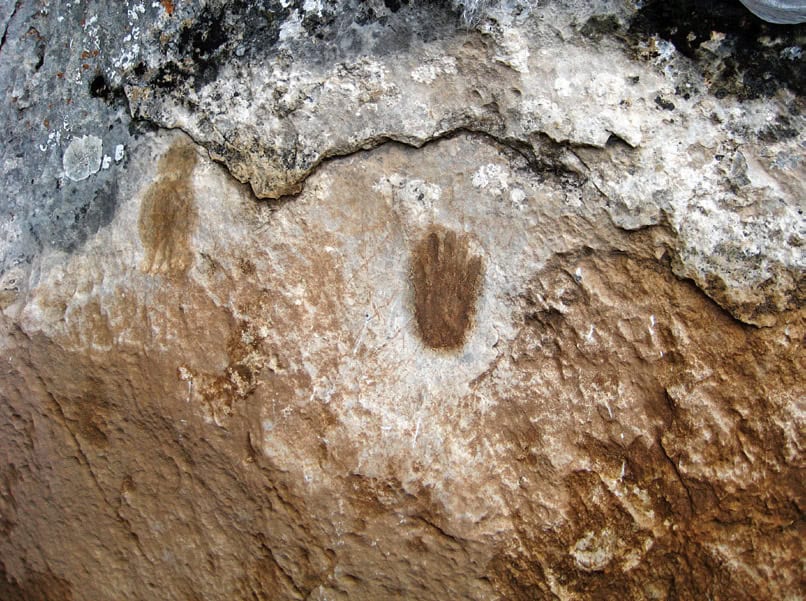
So, after this first destruction of Buddhism, there was a second spreading out of Buddhism into Tibet, and it came up in a double way. In the first way, the inner teachings came up with the hero Marpa. He traveled from his home in the Lodrak Valley of Southern Tibet down over the Himalayas three times to get the teachings as they were being destroyed by the Muslims in northern India, and he took them back into Tibet again and again. He brought the really deep, the most essential transmissions of working with the mind into Tibet. Then there was another person, Atisha, a monk from India, who brought some teachings in the second way. Atisha brought the container, the monk’s vows, and all the outer things which stabilize your growth. He came to Tibet several times, slightly later than Marpa, and he also met Milarepa.
Marpa actually spread the teachings quite a bit through his girlfriends. He had eight main wives. The main one was Dagmema, the egoless one. Several other women also came to him and became his students. Several of these ladies spread the dharma around different parts of Tibet, first in Ü and Tsang and then afterwards to other areas. Then, men came to these ladies after they had received Marpa’s blessing and had become interested. Then dharma groups appeared and so on. This worked very well to establish Buddhism in Tibet during this second spreading of the teachings.