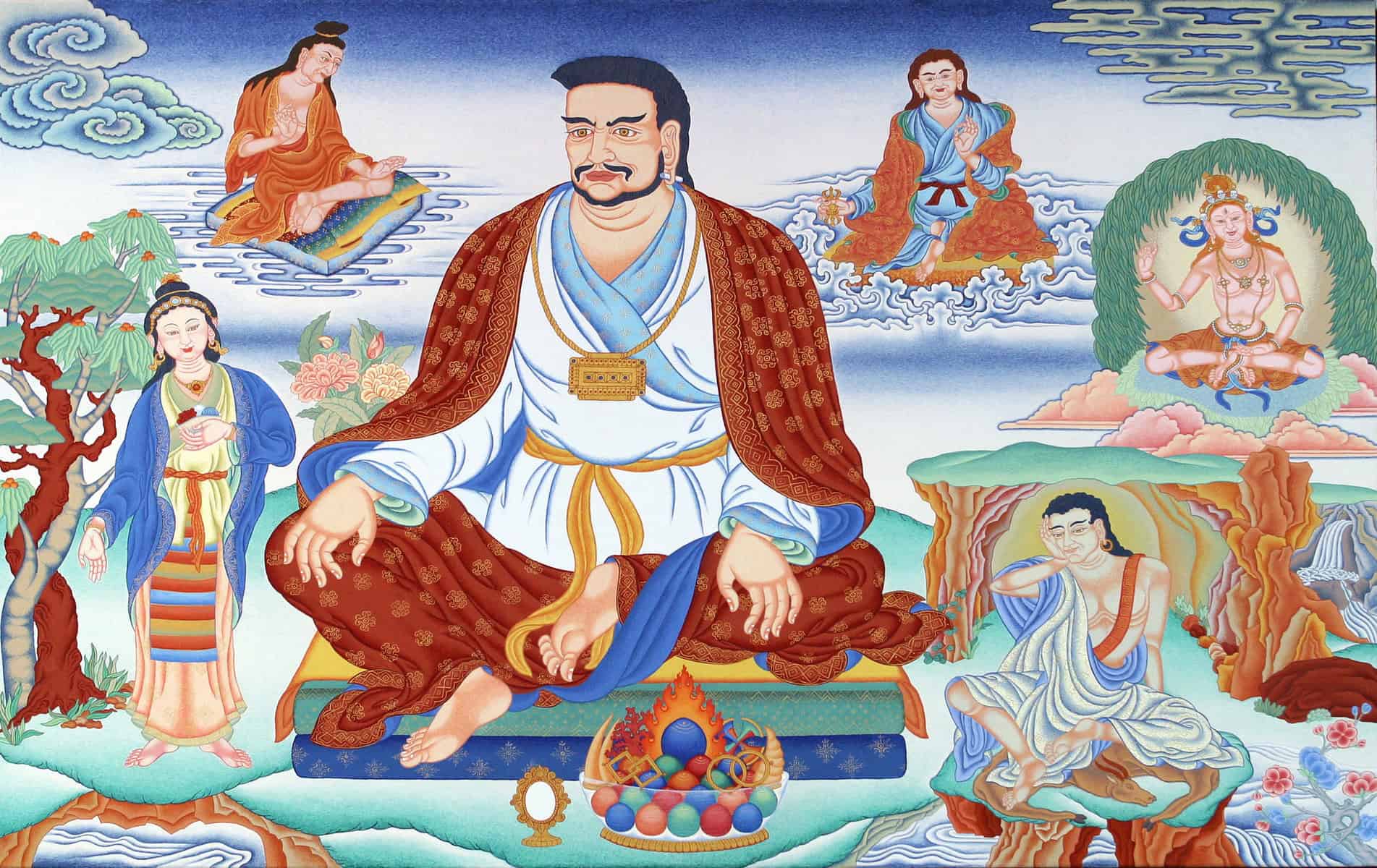
Even though Lama Ole has generally always been the more public part of the Nydahl couple, on many occasions he has emphasized that his activity would have been inconceivable without Hannah. She always worked as hard as he did. Her feminine energy and wisdom channeled his unruly power, especially during his wild years as a young man in Copenhagen. It was at the University there where they met again in 1966 as adults after having known each other as children. Hannah had lived in the same neighborhood north of the Danish capital as a girl, and though five years younger than Ole, even then had awakened his protective instincts during their childhood play. By 1968 the two were married. Their honeymoon took them to Nepal, where first hashish and other mind-altering substances were the initial focus of their attention. But then they met Lopön Tsechu Rinpoche and, on a subsequent trip, the famous Tibetan meditation master the 16th Karmapa.

Although Ole and Hannah came from a completely different culture than the 16th Karmapa, they met him with complete openness. Later, in an interview about her search for the truth, Hannah said:
I was always fascinated by the mind itself and its functions and wanted to know and understand more about it. The whole psychedelic wave in the sixties was about that, only we missed the real point because we first looked for the solutions in psychedelic drugs. That’s why when I first read a Buddhist text, it was like a revelation, because it gave all the answers to my questions that I had been looking for, for a long time.1
Karmapa immediately recognized their connection to the teachings. Hannah said:
It was a combination of meeting the perfect example of my teacher, the 16th Karmapa, and becoming familiar with the Buddhist view that made me become a Buddhist. […] When we met the Karmapa and experienced his convincing and powerful example of incredible love and wisdom, there was no doubt at all that this was the right path.2
The famous lama probably also knew that Tibetan Buddhism would have a hard time in Asia and prepared Hannah and Ole for their future life work: spreading Buddhist teachings according to the Karma Kagyu lineage and establishing centers throughout the free world.
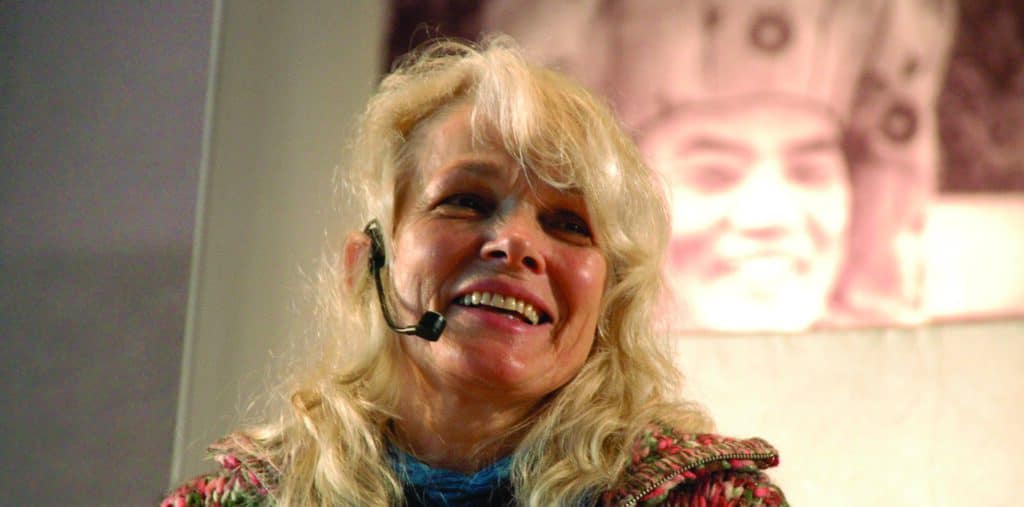
When they returned to Europe in the fall of 1972, several joyful but very busy decades awaited the Nydahl couple. While Ole (later Lama Ole) mainly took on the role of a traveling teacher in Europe and soon after in other time zones, the linguistically gifted Hannah (later Lamini Hannah) was also constantly on the road—roughly half the year with her husband and the other half in travel groups of practically all the high lamas of the Karma Kagyu lineage worldwide. She translated their talks into English, German, French, and Danish, organized in the background. Hannah translated meditation texts, instructions, and other sources from Tibetan. Besides this, she knew all the internal matters of the Tibetans. From the early 1990s, when the political dispute over the rebirth of the 16th Karmapa occurred, dividing our lineage and the Tibetan community, she was an indispensable helper and advisor to our lineage holder, the 14th Kunzig Shamar Rinpoche (1952-2014). He trusted her completely. Together they planned the escape of the young Thaye Dorje, His Holiness the 17th Karmapa and his family from occupied Tibet, so that our present lineage holder could prepare for his future role in freedom.
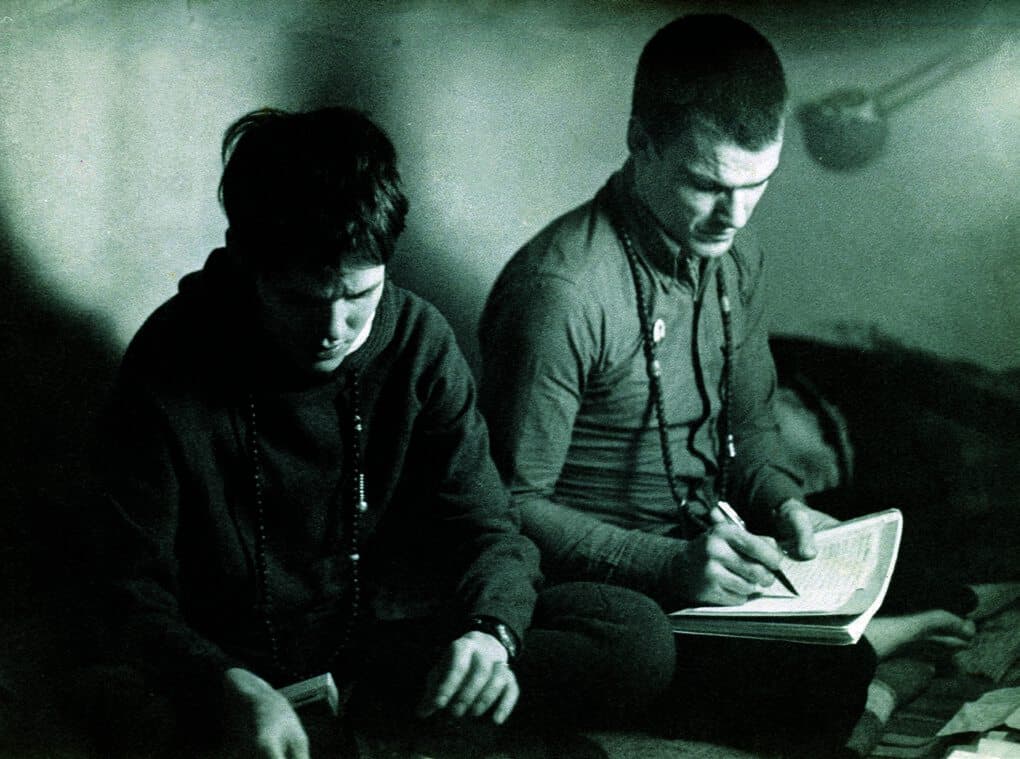
Hannah’s expertise was vast but above all was built on deep insight into the teachings and meditation. Coupled with the right motivation, her aspiration was that the understanding and practice of Buddhism would stand the test of time in every situation:
If Dharma study is practiced in the right way—that is, by always remembering why you are doing it, which is for others and as part of your practice—then it will help you to develop into a useful and independent person. It should never be seen as something separate from practice. Most conflicts, even in dharma circles, would dissolve like dew in the sun if people understood the view in Buddhism more clearly. Ultimately, this is the level where Buddhism is unique.3
She lived this aspiration despite her often exhausting workload, which she managed while mostly living out of a suitcase. Hannah explained,
As a practitioner, you learn not to depend on external circumstances. You learn to rest within yourself. That makes it easier to be on the go all the time. You can learn this lifestyle.4
Throughout her travels she always remained clear, balanced, and gentle, but also fearless, even in extreme situations. For example, during a kidnapping in Colombia in 1991, heavily armed guerrillas in the war-torn country hijacked the tour bus carrying (among others) Hannah, Ole, and Tomek. The occupants were held at gunpoint and forced to listen to a hateful speech by the leader in which he threatened that if he ever got his hands on gringos (white European-descended people), he would shoot them immediately. While Hannah relaxed and meditated in the background, the protectors did their job and kept the leader from noticing the Europeans in front of him. Another example of her equanimity was after Lama Ole’s parachuting accident during the 2003 summer course, Hannah gave brilliant lectures in his stead while her husband was in intensive care in a critical condition.
At the end of December 2006, Hannah had been diagnosed with advanced cancer, and at the New Year’s Eve course in Stuttgart a few days later, she said goodbye to many of her and her husband’s students. Lama Ole then stopped his travel program to be close to her during her last months, which they spent together in the Copenhagen Diamond Way Buddhist Center.
During the last months of her life, Hannah distributed her many tasks among reliable friends. Meanwhile, both the 17th Karmapa and 14th Shamarpa called her more frequently at the Copenhagen Center. And donations were diligently collected to buy the Europe Center in Immenstadt, Germany. When the end of her life arrived, she was already clinically dead but returned to her body more than a dozen times. Then, at 1:43 a.m. on April 1st, 2007, and surrounded by her husband and friends, Hannah Nydahl left her body “in the finest of style,” as Lama Ole wrote a few hours later in a newsletter to the centers. She was 60 years old. As her final wish to us, he conveyed, “The finest gift to Hannah is to continue with your practice.”5
The 17th Karmapa Thaye Dorje wrote in a tribute to Hannah:
“What she has accomplished is immeasurable and she is simply irreplaceable. Although her physical form is no longer with us, her compassion and loving kindness will continue to be.”6
Jigme Rinpoche characterized her with these words:
“Hannah dedicated her entire life to the dharma, and her contribution was immense. She touched the lives of so many people, and we have always known her to be cheerful, open, and above all humble, while never demanding of anyone.”7
- Unger-Göbel, Ulla and Göbel, Detlev. “Die Ebene, wo Buddhismus einzigartig ist.” Kagyu Life, 1998, no. 25. ↩︎
- Unger-Göbel, “Die Ebene.” ↩︎
- Unger-Göbel, “Die Ebene.” ↩︎
- Interview from “Hannah.” (German version) Video, 44:45. ↩︎
- Letter from Lama Ole, DWBN News, no. 28, April 1, 2007. ↩︎
- Letter from H.H. 17th Gyalwa Karmapa, DWBN News, no. 33, April 10, 2007. ↩︎
- Letter from Lama Jigme Rinpoche, DWBN News, no. 34, April 11, 2007. ↩︎