Dr. Manfred Seegers

Dr. Manfred Seegers is an authorized Buddhist teacher after having completed a five-year study program. He holds a Master of Philosophy (MPhil) in Religious Studies from the University of Kent, UK, and a Ph.D. in Tibetology from the University of Hamburg, Germany. From 1990 to 2000, he studied and taught at the Karmapa International Buddhist Institute (KIBI) in New Delhi, India. His books Buddhist Terms, Knowledge on Meditation and Aspects of Timeless Wisdom have been translated into many languages. He gives talks and seminars in many countries.

shamarpa and karmapa thangka

The Significance of the Shamar Rinpoches

The 14th Shamarpa Chökyi Lodrö, who passed away in 2014, was the second highest lineage lama after the Gyalwa Karmapa. As well as having an extraordinary personality, he was also responsible for identifying, enthroning, and teaching Thaye Dorje, His Holiness the 17th Gyalwa Karmapa. This article begins with a few words about the passing of the 14th Shamar Rinpoche, explores the significance of the Shamarpa in the Kagyu lineage, and gives an overview of the incarnational lineage of Shamarpa from their lives in India to the present day. (An article by Manfred published in issue thirty-nine of Buddhism Today focused on the life of the 14th Shamarpa Chökyi Lodrö, his dharma activity, as well as his support for Diamond Way.)

The Significance of the Shamar Rinpoches Read More »

karma kagyu lineage

The Kagyu Lineage: The Essential Teachings, Part 3

The following article is the third and final in a three-part series of articles, offering an outline of the origin and contents of the Kagyu lineage of Tibetan Buddhism. The first article used the Kagyu lineage as an example to explain the roles of the Buddhist practitioners in Tibet and what precisely constituted a lineage or tradition within Tibetan Buddhism. The second article provided a brief overview of the origins of the lineage and its historical development up to the time of the Third Karmapa in the early fourteenth century. This article discusses the essential teachings of the Kagyu tradition, as handed down and practiced until today. All three articles are based on the 2009 Master of Philosophy thesis by the author and have been slightly worked over for this magazine.

The Kagyu Lineage: The Essential Teachings, Part 3 Read More »

the kagyu lineage, part 2 (indian origins and early tibetan master)

The Kagyu Lineage, Part 2 (Indian Origins and Early Tibetan Master)

The following article is the second in a three-part series of articles, offering an outline of the origin and contents of the Kagyu lineage of Tibetan Buddhism. The first article used the Kagyu lineage as an example to explain the roles of the Buddhist practitioners in Tibet and what actually constituted a lineage or tradition within Tibetan Buddhism precisely. This article provides a brief overview of the origins of the lineage and its historical development up to the time of the 3rd Karmapa, in the early fourteenth century. In our next edition, the third article will discuss the essential teachings of the Kagyu tradition, as handed down and practiced until today. All three articles are based on the 2009 Master of Philosophy thesis by the author and have been slightly worked over for this magazine.

The Kagyu Lineage, Part 2 (Indian Origins and Early Tibetan Master) Read More »

marpa lotsawa (1012–1096)

The Kagyu Lineage, Part 1 (Yogis, Lay people, and Monks, and Lineages of Spiritual Instruction Versus Established Schools)

The following article is the first in a three-part series of articles, offering an outline of the origin and contents of the Kagyu lineage of Tibetan Buddhism. The first article uses the Kagyu lineage as an example to explain the roles of the Buddhist practitioners in Tibet, and what actually constitutes a lineage or tradition within Tibetan Buddhism precisely. In our next edition, the second article will provide a brief overview of the origins of the lineage and its historical development up to the time of the Third Karmapa, in the early fourteenth century. The third article will discuss the essential teachings of the Kagyu tradition, as handed down and practiced until today. All three articles are based on the 2009 Master of Philosophy thesis by the author, and have been slightly worked over for this magazine.

The Kagyu Lineage, Part 1 (Yogis, Lay people, and Monks, and Lineages of Spiritual Instruction Versus Established Schools) Read More »

14th shamarpa, mipham chökyi lodrö (1952–2014)

The Extraordinary Life of the 14th Shamar Rinpoche

This article explores the life and extensive dharma activity of the 14th Shamarpa, Mipham Chökyi Lodrö (1952–2014). As there are already numerous comprehensive biographies about the 14th Shamarpa, we will give an overview of his life history here. This includes a brief description of his extraordinary personality. The main focus will be on his key projects and on his activity in the Diamond Way centers. With this, we will also emphasize his importance as lineage holder and acting leader of the Karma Kagyü lineage for the transmission of Tibetan Buddhism around the world.

The Extraordinary Life of the 14th Shamar Rinpoche Read More »

The Abhidharma Teachings (Knowledge About Ourselves and the World)

While visiting the Europe Center in 2012, Gyalwa Karmapa, head of the Karma Kagyu lineage, recommended that his students study the Abhidharma. In due course this has brought up questions concerning the topic and has given rise to this short overview of the Abhidharma teachings. At a meeting of traveling teachers, Gyalwa Karmapa mentioned the reason for his suggestion: that his main intention was to clarify the terminology used during question and answer sessions in his lectures. If the questions asked were closer to specific topics, the answers could be more precise. The Abhidharma teachings offer a frame for many important topics as they treat everything we can know about the world and ourselves.

The Abhidharma Teachings (Knowledge About Ourselves and the World) Read More »

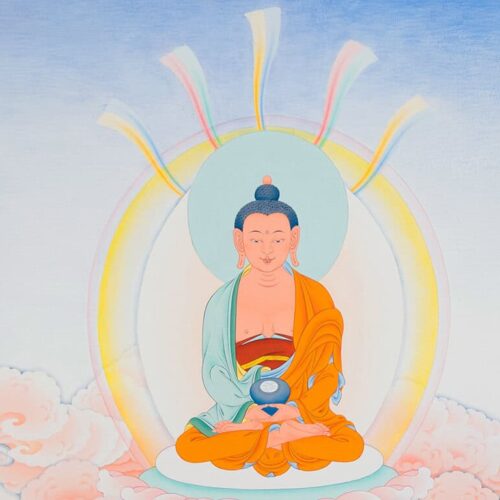
amitabha painting in karma guen

The Different Levels of Amitabha Practice

The historical Buddha Shakyamuni had disciples with varying capacities for comprehending his teachings. Although he actually taught one single way to enlightenment, different parts of his teachings were taken as vehicles according to the capacities of his disciples. Basically, one can subdivide all of the Buddha’s teachings into the two vehicles of Sutra and Tantra. Sutra is also called “the causal vehicle,” because here one builds up the causes for enlightenment. In Tantra, “the vehicle of fruition,” one identifies with the fruit, or the different aspects of enlightenment.

The Different Levels of Amitabha Practice Read More »

The Third Karmapa Rangjung Dorje (1284-1339): Author of the Great Seal Wishes

The Karmapas for many centuries have held the position of supreme head of the Karma Kagyu lineage of Tibetan Buddhism. The Kagyu lineage is known as that of “the oral transmission.” In this lineage, besides the core instructions of the Great Seal (Skt. Mahamudra) and the Six Teachings of the Indian master Naropa (Skt. naro saddharma), a variety of categories of Buddhist transmissions are passed down from teacher to student through successive generations. So far, 17 incarnations of the Karmapa have been officially recognized. They have often simultaneously performed various functions as scholars, practitioners, artists, healers, visionaries, peacemakers and leaders of the Karma Kagyu lineage. From the twelfth century to the present time, the Karmapas have performed the selfless activity of enlightened teachers, exemplifying the highest level of wisdom and loving kindness that manifests as the result of Buddhist practice.

The Third Karmapa Rangjung Dorje (1284-1339): Author of the Great Seal Wishes Read More »