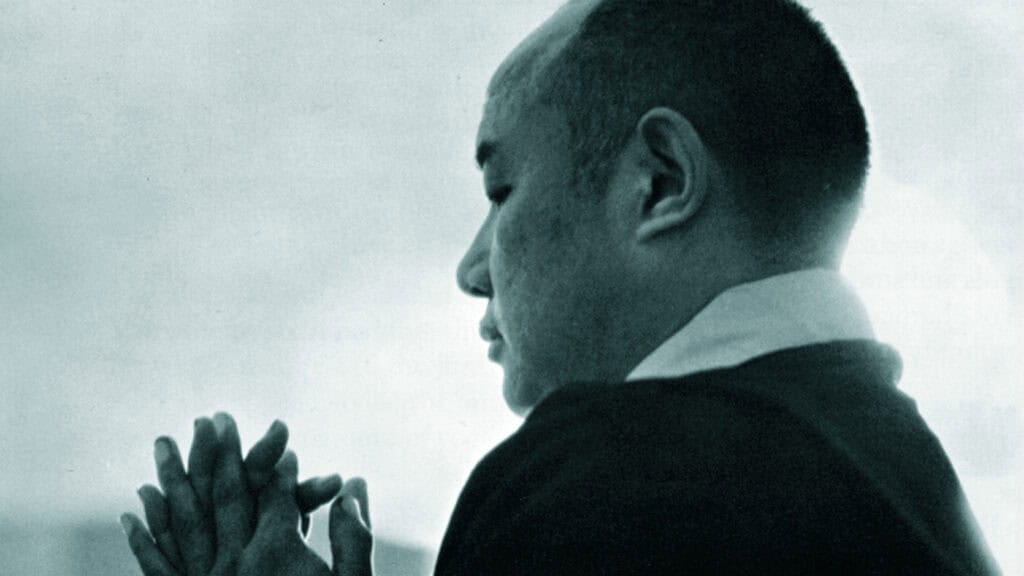
Hannah translated many texts of Diamond Way Buddhism into Western languages. She was responsible for the Karmapa International Buddhist Institute (KIBI) in New Delhi, India, and helped to build, from the ground up, the International Institute for Tibetan and Asian Studies (ITAS) at Karma Guen in southern Spain.
Hannah gave many courses on Buddhist teachings and translated for many Tibetan lamas. She was the link between the more than 530 Diamond Way Buddhist Centers in the West and the Tibetan monasteries in the East, mostly in India and Nepal.
When Hannah and Lama Ole met H.H. the 16th Karmapa, Tibetan Buddhism did not exist in the West. This made the connection to the East very important. When she and Lama Ole met Buddhism in the late 1960s, very few texts were translated, and few teachers spoke English. So, she had to learn Tibetan. When they were in the Himalayas doing their practice, they had to translate all the meditation texts themselves. Later, she interpreted for the Tibetan lamas who came to Europe.
Hannah herself would often say that bringing Tibetan Buddhism to the West became their responsibility and was simply their specific function at that—or this—specific time. From early childhood she had many questions, wondering about the meaning of existence and such things. She wanted to know what happened to the mind when one died.
Meeting Buddhist teachings was a revelation to her. The first direct Buddhist teachings she read, in 1968, were in a book called Tibetan Yoga and Secret Doctrines. In the beginning of the book was a text by Gampopa, The Garland of Precious Jewels, translated by Evans-Wentz. (This is a collection of teachings presented in sets of advice that starts on an ordinary relative level and goes through to the absolute teachings.) Hannah once said that this book “gave answers to all the things I had wondered about. It was a very strong experience for me, like coming home.”
It was at that point that she and Lama Ole met the 16th Karmapa. After three years of study and practice, including receiving transmissions from the 16th Karmapa, they returned to Europe at his request to bring Tibetan Buddhism to the West and, as Hannah once said, “to make the deep wisdom of Tibet accessible to our part of the world and open the minds of the extroverted West to things as unfamiliar as mantras and meditation.”
Knowing Tibetan, translating texts, and interpreting for Tibetan lamas when they gave teachings, she was always engaged in bridging Tibetan Buddhism, East and West. Along with the many empowerments that she received and held, Hannah was perhaps the best-trained and most experienced Western woman in the lineage.
Upon her death, H.H. the 17th Gyalwa Karmapa Trinley Thaye Dorje wrote:
She has kept her promise to spread the dharma in the West…We should not grieve over her passing but rather rejoice in her accomplishments and activities. What she has achieved is beyond measure, and she is simply irreplaceable. Though her physical form is no longer with us, her compassion and loving kindness will be.
Jigme Rinpoche wrote:
Hannah devoted her whole life to the dharma, and her contribution has been immense. She touched so many people’s lives, and we always found her to be cheerful, open, and, above all, unassuming and modest, never making demands on anybody.
The following article is presented here as a tribute to Hannah Nydahl’s tremendous work and contribution to Diamond Way Tibetan Buddhism in the West. It was originally a talk given at a course on H.H. the 16th Karmapa in Leverkusen, Germany, in 2005.
I was asked to talk about the 16th Karmapa. Ole and I obviously share many experiences. We met the Karmapa together, and we practiced together, so a lot of our experiences are the same. Plus, there are two books about our story: Entering the Diamond Way and Riding the Tiger.
Since this whole course is about the 16th Karmapa, it is a great opportunity to thank him again, given that he is actually the source of everything we share. If we had not met him, then you probably would not have met him through us either, and everything would have been completely different. I am so grateful to him since he completely changed our lives.
To really understand how extraordinary it was for Ole and me to meet the Karmapa, one needs to understand our Danish Scandinavian background. One is pretty much born as an atheist, and everything to do with religion is very suspicious. That is the general attitude. In addition, both Ole and I grew up in academic families, where religion was not as important as humanistic values.
During the “Flower Power Sixties,” we were not interested in religion at all. Instead, we were looking for psychedelic experiences because we were interested in the mind. And if one was interested in the mind, religion wasn’t the thing. Those psychedelic experiences were very convincing for us at that time. It was a time when Hindu gurus appeared in Denmark. A lot of our friends became their students, but they didn’t convince us. And we weren’t really interested.
We then decided to go on our honeymoon to Nepal. This is where we first met Lopon Tsechu Rinpoche, and because of him, we could then later meet Karmapa. It was the first time we met someone who, without any apparent reason, made a big and lasting impression on us. You know the story of how we met him, and also know what happened when we came home: We had to spend some time on “public expense.”
This was a big turning point in our lives. Of course, there is no torture in Danish prisons, but solitary confinement, which, for some people, is just as bad. You are isolated and completely on your own—no door handle and no communication at all. Ole and I were held in separate cells, probably because they hoped to get more information out of us this way. During these six weeks, Lopon Tsechu Rinpoche was very clear in our mind, even though we didn’t really know anything about Buddhism. We were not allowed to have any personal belongings, save for this one book, Tibetan Yoga and Secret Doctrines. That was the book for us. We worked through it, and it was a very deep experience for me. It contains, among other explanations, very profound and versified basic teachings by Gampopa.
Without really knowing that this was actually Buddhism, it was like a revelation in this extreme situation, and it opened us up even more. Even though Ole and I had no direct contact with each other, we had a very strong inner connection, so intense that the police couldn’t do anything against it, as hard as they tried. And without knowing what meditation was, we both started meditating. Probably because of previous habits, we had some experiences, and it felt as if Lopon Tsechu Rinpoche constantly appeared in our mind.
I was released first, and Ole came out a little later. We were both at the university at that time—Ole was studying English, and I was studying French and Literature. The day before Ole came out, I was looking around on campus and noticed that there was one teacher who was teaching Tibetan. I thought, “Why not? Let’s see what that is.” So, I went there and found this Tibetan teacher, Tarab Tulku, who taught Tibetan at the Department for Oriental Studies. Although I had no idea who he was, I went there and learned the Tibetan alphabet. Tarab Tulku was a very nice man, and to this day we have a very nice friendship. Back then I didn’t know why I learned the Tibetan alphabet. It was interesting, but I didn’t connect it with Buddhism or anything at that time.
When Ole came out and our friends suggested that we go to Asia, we thought, “Why not?” We had to go back and find this man again. We didn’t know much about who he was and where he was, but at that time, simply traveling there was already very exciting. So, we went all the way back to Asia, through all the Muslim countries, a completely different world. Finally, we came to Bodhgaya. Just arriving and being there was very touching, although we still didn’t know really what Buddha or Buddhism was. But our main thought all the time was: We want to go and meet this man again, namely Lopon Tsechu Rinpoche.
When we arrived in Kathmandu, the first thing we saw were all these people waiting on the streets. We asked them what was happening, and they told us that they were waiting for Karmapa. At that time, we had no idea who Karmapa was. Our main goal was to find this woman again who led us to Lopon Tsechu Rinpoche, and then find him through her. When we finally found her, we found out where Lopon Tsechu Rinpoche lived. But every time we went there, they told us, “Sorry, he is not home. He’s with Karmapa.” So, we asked, “Who is Karmapa and where do we find him?”—because we wanted to find Lopon Tsechu Rinpoche. They told us, “Go to Swayambhu, you can meet him there today, Lopon Tsechu Rinpoche will be there, too.”
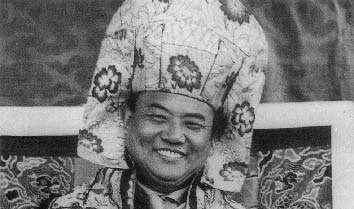
So, we went to Swayambhu and climbed up the stairs. If you have been to Swayambhu, you know what climbing means on the steep side of Swayambhu. We noticed that there was something going on, and when we arrived at the top, we saw this big crowd to our right. Karmapa was sitting there with his crown on his head. That was our first impression of Karmapa. And actually, that was it, you could say. Because he looked at us, and we were immediately completely fascinated. It was quite an exotic sight, and we didn’t really know what was going on. We just looked and absorbed everything. Then we went to the front, and he blessed us for the first time.
Karmapa must have known that we needed something very convincing in order to develop complete trust. Maybe it is because we had a very skeptical background and had done all this “psychedelic research” that from the first moment he actually gave us such strong blessings that we could really feel it and be convinced. He really worked wonders—and if he had not done that, then I think we would not have followed him. Also, for Ole it was not a normal thing to accept somebody as a teacher. Both of us— me in a different way from Ole—were so convinced that we actually knew everything without anybody’s help, and probably even better than anybody else. Karmapa’s way of working with us was so strong that the first blessing simply gave us a real transmission. At that time, we compared it to LSD, but we were not on anything, and it was different. The blessing worked in a way that I caught a kind of glimpse of mind.
This experience, as well as the following ones that we had in direct contact with Karmapa, were so strong that there was never any doubt that this was the right thing. We are very, very grateful for that, because even though there were many ups and downs, and many things happened later, this convincing experience meant that we never doubted that this is the right thing. Even when one is not on that level yet, one knows that it is just a matter of time. Karmapa gave us this trust the first time we met him. I couldn’t put it in words at the time, but from that moment something fundamentally changed. Ole and I had to sit down and just rest in that blessing. Then the Tibetans came and said, “Don’t you want to come up and see Lopon Tsechu Rinpoche?” After all, we were there because we wanted to see him, and he was upstairs with Karmapa.
We were led to a room where Karmapa and Lopon Tsechu Rinpoche were. We must have looked very funny to them, because—well, we looked like hippies. [Hannah laughs.] I had this Afghan vest, which was always a little smelly. Besides that, we were clean, I mean, we were not that kind of hippies! We also never started the day with a spliff, we never did that; it was always evenings only. I was quite thin then, and very tall compared to Asians.
Karmapa was just amazingly loving toward us! For some reason, the first thing he taught us were the Tibetan names of the five [wisdom] colors. Of course, we didn’t understand the language, but Karmapa just laughed and blessed us. Lopon Tsechu Rinpoche was there, too. We were very glad to meet him again, since we were quite focused on him. Then we went out again, and everything was fine.
Much later, Lopon Tsechu Rinpoche told us what happened afterward. After having met Karmapa for the first time, we had a couple of difficult months. It was 20 years later that Lopon Tsechu Rinpoche gave us kind of an explanation for that. He told us that, when we left the room, Karmapa asked him who we were. Lopon Tsechu Rinpoche called us his disciples already back then. Karmapa just replied, “Okay, but now they are my disciples!”
So we had met Lopon Tsechu Rinpoche again, and we had now also met Karmapa. Even though we didn’t know what was going on—we didn’t even know they were Buddhists—we really wanted to find out more about these people, because they were just so amazing. We felt that there was something there, and we wanted to find out more. We simply followed Karmapa everywhere. We ran up and down the mountains, and wherever he flew in his helicopter, we were already there. It became kind of a joke with the Tibetans that we were always there. And Karmapa was so kind to us! Incredibly kind!
At that time, there were not many foreigners, and Karmapa took us everywhere. One time, he took us to Urgyen Tulku’s monastery. Karmapa was always making a lot of jokes with Ole, even on a physical level. Ole was squeezing his hand and tapped him on the shoulder quite intimately, something one doesn’t usually do with Karmapa! But we didn’t know that, and he didn’t seem to mind, and he was just laughing a lot.
Before he left Nepal, he invited us to come to Sikkim. We were of course very happy and asked Lopon Tsechu Rinpoche if it was okay with him, because he was our first teacher, and we were very loyal to him. He said it was fine, that we should go to Sikkim.
The next months, we just waited, because everything simply went wrong. We did not get a visa because it was a politically difficult time. Sikkim was a restricted area, and it was not easy to get a permit to go there. We were waiting and waiting, month after month. Ole got a job at the American library teaching English, so we had something to live off.
We rented a room just next to Lopon Tsechu Rinpoche, but we were still hippies, smoking pot. Every day we went to Lopon Tsechu, and we were getting more and more eager to learn something from him. We started to meditate on our own from books, doing hatha yoga, practicing shine— that’s at least what we thought back then. Sometimes, we would go to the mountains, take some LSD, and come back to Lopon Tsechu Rinpoche and ask him for teachings. And he was very clever! So clever! He wasn’t teaching us anything! He was just kind, and the more time went on, the more desperately we wanted to learn something. When the visa came, we had already quit smoking pot. We thought, “Why are we still smoking? Why don’t we get any explanations?” And as so many changes started to happen, we found out that we don’t learn anything from smoking. It was a waste of time!
You have to understand that everybody was smoking at that time. It was a big thing, but we grew tired of it—and more and more impatient. However, we still thought that LSD could change the world and could lead to enlightenment.
Finally, after seven months, our visas came, and we could go and see Karmapa. So we went to Sikkim, and when we arrived, it was…magic! We arrived in pouring rain, during monsoon season. If you have been to the Himalayas during this time, you know what that means. It is very, very wet, and the further East you go, the wetter it is. We were dropped off at the foothills at the base of the mountain that Rumtek is located on, and we started our ascent. It looked close, but we walked, and we walked, and we walked— and finally, late in the evening, we arrived. It was dark, and we were soaking wet. When we took our boots off, I had my first ever encounter with leeches. My shoes were full of blood. It looked quite dramatic, but for Sikkim that is quite normal. The Tibetans there were very kind to us. They gave us a room and said, “The morning is a more auspicious time to meet Karmapa, you have to wait!”
The next morning, they took us up to see Karmapa. The first person we met there, in the front room, was actually Lama Jigmela with a dog. If you know Lama Jigmela, you know that he has many dogs, even today. Karmapa also had dogs, and we were waiting and waiting, and eventually we were allowed in and finally saw him again.
We had been waiting for this moment for such a long time! Karmapa blessed us, and we were told that we could take refuge now. We didn’t know much about refuge, we just totally surrendered to Karmapa. He sent somebody who prepared us for the day—it was the full moon of September. We both shaved our hair. Without knowing what to expect, we left everything up to Karmapa. We also had no idea what would happen after the refuge, we just let him decide. We literally gave him our body, speech, and mind.
We were taken up to his room for the ceremony. Apart from Karmapa and some lamas who helped, there were only Ole and me. We had to repeat everything Karmapa said, in Tibetan, and he made us sit in this uncomfortable position, which you also take when taking commitments. We were sitting in that position, while it went on and on and on, and we repeated these words. It hurt! It hurt so badly! For Ole, it was even worse! It was really tough! Of course, Karmapa knew exactly what was going on, and it was like…you can say that from that point on, things turned a little more serious. His way of teaching us was very skillful.
When the ceremony was over, we were told to come to the front to Karmapa. You can imagine how tricky it was to walk after sitting in that position! Somehow, we managed to get over to him, he cut our hair, and then we took the five lay commitments/promises. Karmapa gave us names and a blessing. Norbu, the thangka painter, was also there.
Even though our legs hurt so much, it was again a very strong blessing. We didn’t get any explanations, because everyone was speaking only Tibetan, and we didn’t understand at the time. So we went back to our room and started to digest what had happened.
It was the time when the “yerne,” or summer retreat, ended in Rumtek, and we were invited to go and see the festivities. It was all outdoors, and I had no idea what it meant to be in the sun with a bald head! By the end of the day, my head was swollen, and I looked like someone from Mars. The next day, it already looked a little better. Karmapa laughed every time something like this happened, and he always sent people to make sure that everything was all right. Norbu helped with the translation, for example our refuge names. At that point we thought, “Now we have met Karmapa, now we are in Sikkim, and that’s it, we will stay here forever and learn from Karmapa!” But things went a different way. First, our visas were only valid for a few days, but because of Karmapa’s influence, we managed to get a few more days. Then, the day came when it was simply impossible to stay in Rumtek. Karmapa called us, and he said, “Now, you have to go!”
Our whole world collapsed. We couldn’t comprehend and felt dead inside. Karmapa then started to teach us. He explained that the time with him is not like ordinary time. For the first time, he pointed out that a few days with him are like a year somewhere else! He wanted us to understand that we had to think in a different way.
Further reading: His Way of Teaching Was Very Skillful: Hannah Nydahl on the 16th Karmapa, Part 2