Old age, sickness and death were the three things that the Buddha Shakyamuni saw before he renounced his life as a prince and decided to seek an end to suffering. Seeing such profound suffering shook him to his core, as he realized that this was the future of all living beings. When this life story is told in the West, we are surprised to hear that the Buddha was sheltered from these experiences until the age of 29, when he left his father’s palace for the first time. In all actuality most of us Westerners today are also sheltered from these same realities.
In Western society, old age, sickness and death are viewed as unpleasant and frightening. It is becoming more common for older adults to live out their lives in nursing homes and die in hospitals. It is no longer the cultural norm for children to take care of their parents as they age. Because of this, people who are old, sick and dying are usually found in the care of busy healthcare professionals in an institutional setting. Many of these healthcare professionals and family members do not understand the unique qualities of this last stage of life.
Since 2005 I have been working with older adults, veterans and hospice patients. I have made the transition from care assistant to certified nursing assistant and now to registered nurse. All of these roles have allowed me to work directly with aging patients and share meaningful experiences that I will always hold in my heart. Seeing old age and sickness has become a part of my everyday life and I have even had the privilege of being present when some patients have died. Every day at work, I am reminded of the impermanent nature of life. I have come to realize that the only guarantee we have in life is that we are going to die; with this in mind, I try to use my time for beneficial activities. One activity that I have found deeply meaningful is helping people through the dying process.
As the Buddhist view permeates more and more into my daily life, I recognize how beneficial and rewarding it is to support people through the dying process. This can mean physically helping the person feel more comfortable, being a listening ear, or simply providing a presence in the room. All of these activities reassure the individual that they are not alone and that they have a support team behind them. Before I walk into a patient’s room, I remind myself that every person has buddha nature no matter how they act or what the condition of their body is. Providing supportive words or whispering mantras to the person could bring them comfort in this last stage of life. However, the last thing I want to do is confuse the dying patient, so before using mantras or any other overtly Buddhist methods to aid them I make sure that the individual is not following another religious path, and that they feel comfortable with this interaction.
Late one night before the end of my shift I went into a patient’s room just to spend a little extra time with him. I held his hand and reassured him that he did not have anything to worry about and he could just let go of this body when he was ready. I whispered a few mantras in his ear and gave his hand a squeeze before leaving for the night. When I arrived at work the next day I found out that he had passed away within minutes of my leaving his room. I felt a sense of calmness when I heard this news, and also experienced immense gratitude for having access to these timeless, practical teachings.
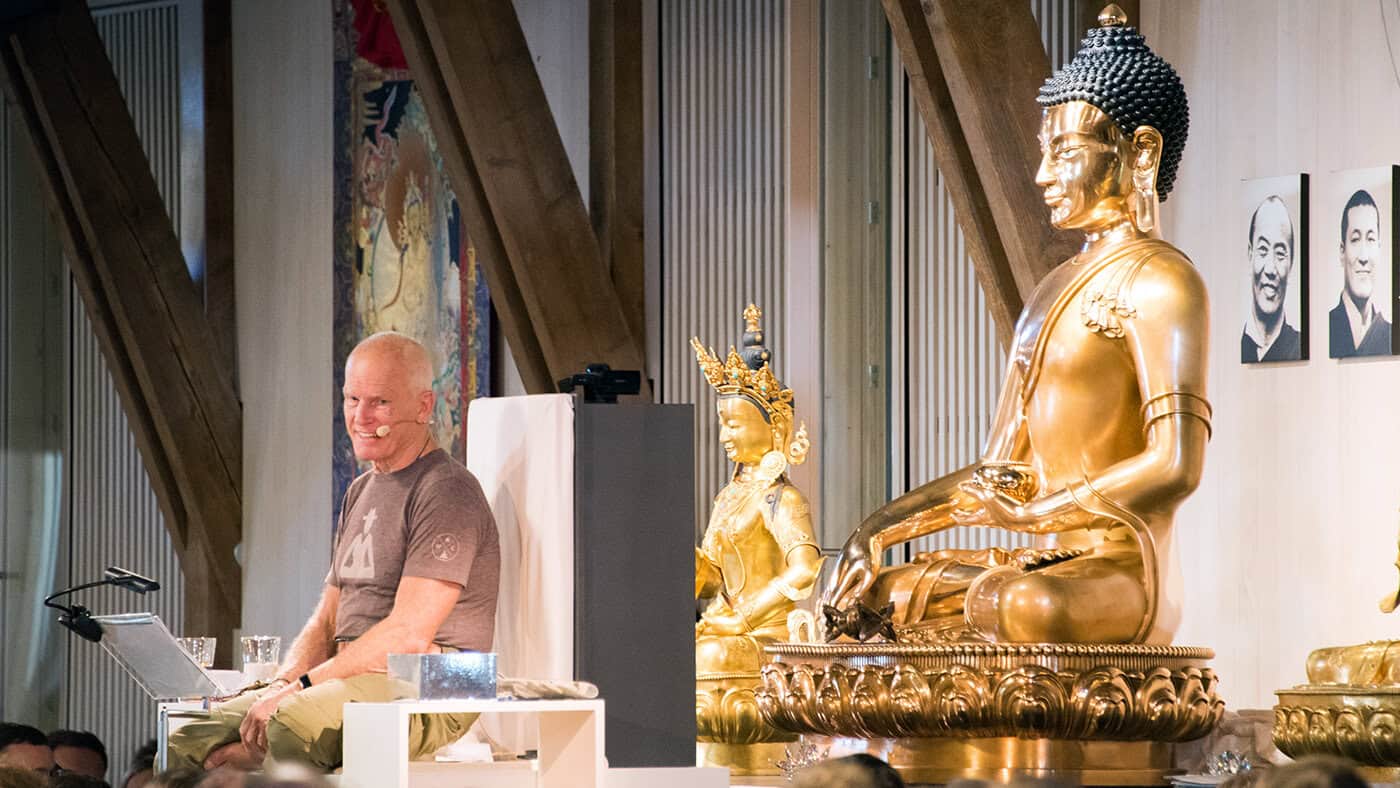
As part of the Karma Kagyu transmission lineage, my teacher, Lama Ole Nydahl, has taught thousands of people a practice called Phowa. This meditation practice teaches individuals how to remain conscious at the time of their death and how to transfer their consciousness to a pure land. In Buddhism, the pure land is not a place, but rather a state of mind where everything is experienced as pure and meaningful. The Phowa practice also focuses on how we can help others make the transition from their body to the pure land. The first time I was with a patient at the moment of death, I was sitting on the patient’s bed holding her hand. I made sure that she was warm enough and comfortable. I reassured her that everything in her life was taken care of and that her family loved and supported her. The patient’s daughter was in the room with me at the time and was aware that her mother was nearing death. While holding the woman’s cold, fragile hand I tried to imagine all the work and benefit she had brought to the world through these bony and mottled hands. Her breathing became more labored and sporadic. Intuitively I felt the exact moment that she took her last breath and I quietly whispered mantras and made good wishes for her. I hugged the daughter and we talked about how peaceful her mother looked now that she had passed away. There was a look of calmness and contentment on the woman’s face. The family came in several days after the funeral and expressed thanks for caring for their mother and for supporting them through the last months.
Many patients I have worked with have reached a point where they have felt satisfied with the life they’ve lived and have decided they don’t want any life-saving measures taken to prolong their life. Once they have six months or less to live, these patients and their families can decide if they would like to receive hospice services.
The philosophy behind hospice care dates back to the eleventh century and focuses on treating the terminally ill patient’s symptoms versus curing the disease. The goal is to ensure that the dying person is comfortable and feels supported as they transition from life to death. For many people, this is a very spiritual experience where ideas and beliefs about the afterlife provide stability and reassurance.
Many Diamond Way Buddhists have felt a connection to hospice work and have been working to strengthen and increase this activity internationally. In Europe, the Buddhistische Sterbebegleitung (Buddhist Terminal Care) association came about in 2008. It grew from a seed planted by Lama Ole Nydahl and his wife Hannah when they voiced a desire for their students to work with terminally ill patients and their families. They approved the project under the title “Buddhist Terminal Care of the Karma Kagyu Tradition.” Over the years, people from all across Germany and Switzerland have met to discuss topics such as patient care, pain therapy, communication and the grieving process. During these events, when the expertise isn’t available from within the Diamond Way organization, experts from the wider sangha (lawyers, doctors and nurses) give the group members advice and guidance.
When providing care for terminally ill people, dharma teachings aren’t generally given, unless the patient wants to talk about it or is interested in meditation; that is not the role of the hospice guide. The focus of the caregiver is to make the conditions for the dying process as beneficial as possible. Lama Ole’s wish is that Buddhist terminal care be given to people who specifically want it. Others in the immediate area (who may or may not be Buddhist) shouldn’t be disturbed or worried by any of the activity. The goal is to do what we can but only at the request of the terminally ill person, and always with the needs of others in mind. The activity of the Buddhist Terminal Care group is based on personal contact and connection with the dying person, and should not be pushed on others in an artificial or forced way. As Caty Hartung (one of Lama Ole’s closest students) has recommended, the style of the approach is, “Small is beautiful.”
Discussing death can create openness about this difficult subject, and this will bring benefit to everyone. Buddhist terminal care can be delivered without fear. This helps change attitudes of the dying person—and of their friends and family—towards death.
In the future, I hope this activity spreads naturally throughout our Diamond Way Centers in North America and the world. By meeting and discussing past experiences and goals for the future we can begin to discuss the dying process as well as how to support sangha friends. Anyone with compassion and an interest can work with the terminally ill. Significant experience with Buddhism or teaching isn’t necessary to help people who are dying. As death approaches, communication focuses on the heart level rather than the intellectual level, and good motivation is therefore very important. If you feel a connection to this activity, please contact me, and we can start the process of bringing ideas together. Many thanks to our Lamas for sharing a liberating view of death and transmitting these precious teachings that guide us in achieving our highest potential.