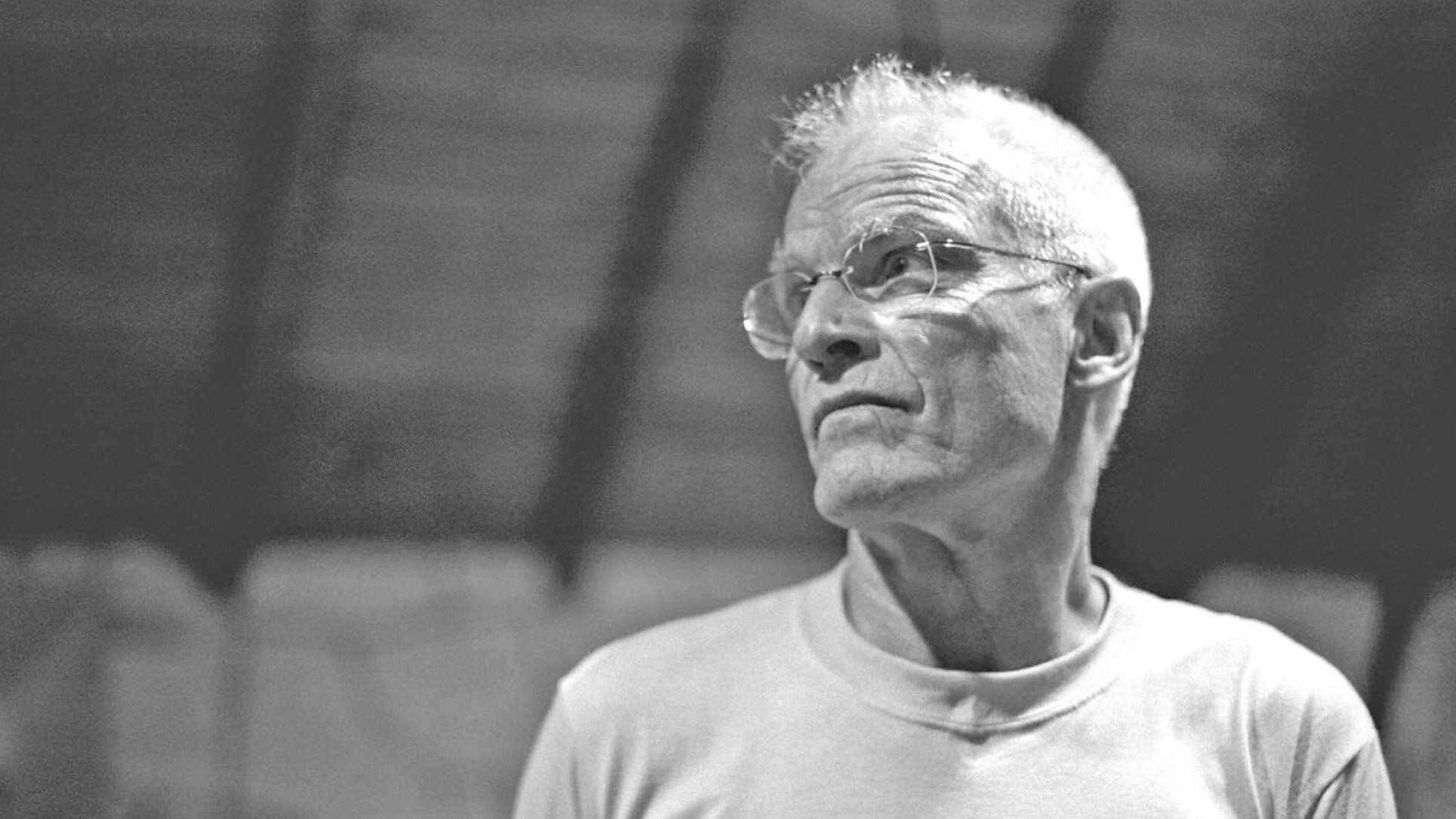
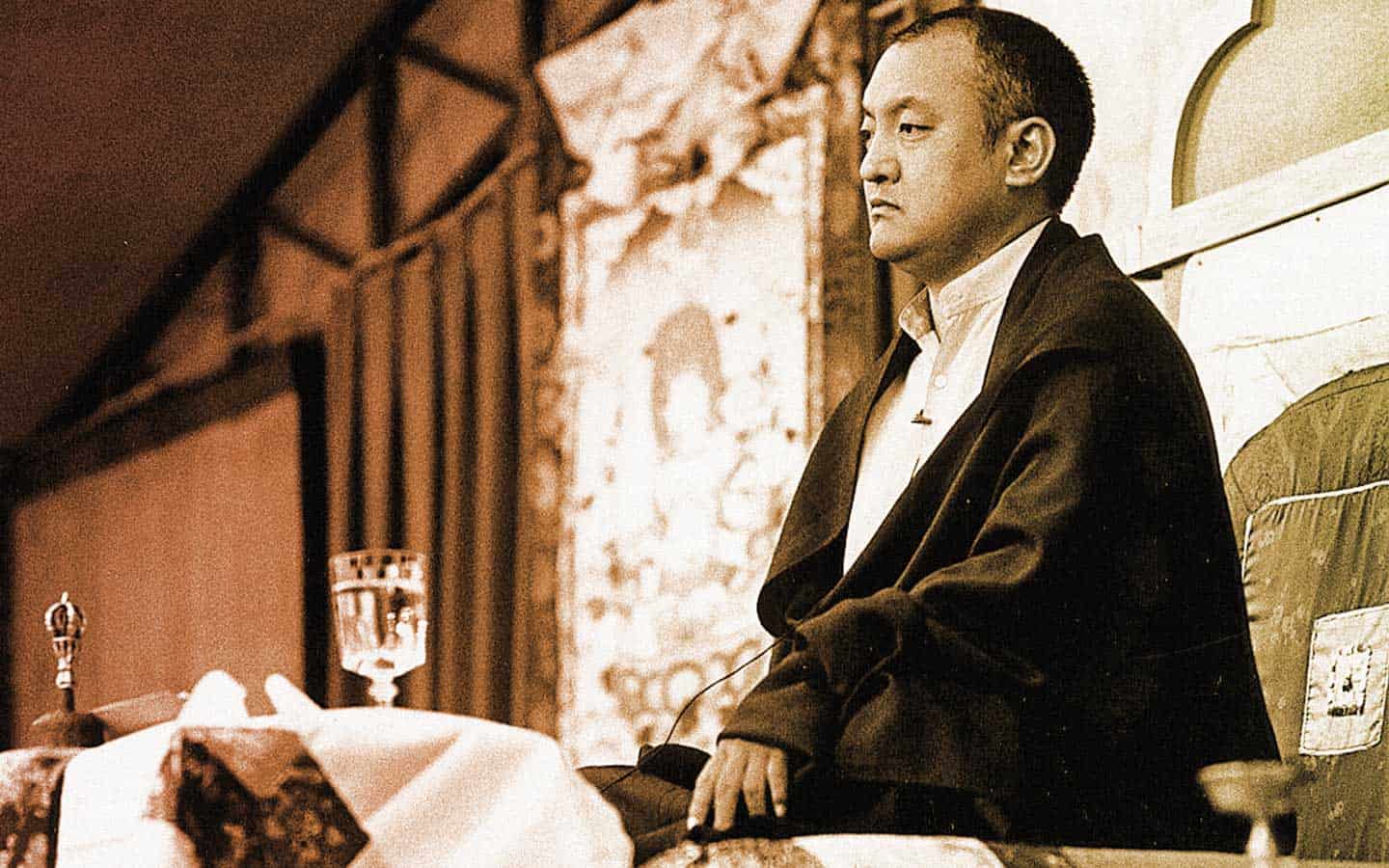
I met the Shamar Rinpoche more than forty-one years ago in Hamburg, Germany. It was his second visit to the West. Later I met him many more times in Asia, especially at the Karmapa International Buddhist Institute (KIBI) in New Delhi, then again and again in Kathmandu and often in the West. I feel a huge debt of gratitude toward him, for his activities, for his spiritual guidance, and for the blessings he gave throughout all those years. This gratitude is the main motivation for writing this article. Anyone who has met him personally and established some kind of connection with him, who participated in one of his initiations or received teachings from him, will probably feel the same way. That is the reason we want to pay special tribute to him and remember his outstanding qualities.

As Lama Ole said after his passing, His Holiness Künzig Shamar Rinpoche “was a bodhisattva of unique qualities— both during and between his incarnations—he offers indestructible opportunities for many to absorb aspects of his immense blessings and insight.” Even though he is no longer with us in a physical form, we can connect with him to receive his blessings as a fully realized Buddha. Once we open ourselves to enlightenment, enlightenment is present. For a person who belongs to the Kagyu lineage—which is known for the very close connection between teacher and student—it is very important to receive the lama’s blessing, practice this form of guru yoga, and then meditate on the nature of one’s mind. It is also a starting point for a better understanding of the great masters, the great bodhisattvas, and their tremendous abilities and qualities.
The Function of the Shamarpa in the Kagyu Lineage
In the spiritual hierarchy of the Karma Kagyu lineage within Tibetan Buddhism, the Shamarpa is second in importance after the Gyalwa Karmapa. A Buddha of the past with the Tibetan name Könchok Yenlag manifests in this age as a great Bodhisattva—and that is Shamarpa. At the same time, he also embodies the principle of Buddha Amitabha, the Buddha of Limitless Light. The 2nd Karmapa, Karma Pakshi (1110-1193), wrote in his notebook shortly before his death: “Future Karmapas will appear in two emanations.” These two emanations were the Black Hat Karmapa, the Karmapa with the black hat or black crown, and the Red Hat Karmapa, the Karmapa with the ruby-red crown. Shamarpa means “the man” (Tib. pa) “with the red hat” (Tib. shamar).
The 4th Karmapa, Rölpe Dorje (1340-1383) later confirmed this prediction with the 2nd Shamarpa directly. He said, “You are one manifestation and I am the other. For this reason, the responsibility for the uninterrupted continuation of the teachings of the Kagyu lineage rests equally on you and on me.” Over the centuries the Karmapas and the Shamarpas have recognized each other. They are usually born very close to each other—often even in the same family.
The Early Incarnation Lineage of the Shamarpa
There are few sources of information about the earlier incarnations of the Shamarpas before officially becoming the Shamarpa. One important source is The Blue Annals, a fifteenth-century history treatise by Gö Lotsawa Zhönnu Pal (1392-1481). Another source is The Crystal Mirror of Philosophical Systems (the 6th chapter on the Kagyu tradition) by Thuken Lobsang Chökyi Nyima (1737-1802), written in the last part of the eighteenth century. Both sources report that there was a master in India named Dasananda (Kholpoga in Tibetan) who lived in the middle of the eleventh century and was a disciple of the great master Tilopa (988-1069). Tilopa is portrayed in many records as the Indian founding father of the Kagyu lineage. Dasananda is described as the first known master in the lineage of conscious rebirths that later manifested as the Shamarpas. The two sources have slightly different versions of the future Shamarpa’s next incarnation.
The Blue Annals describe his rebirth in Nepal as a master named Zhonnu Sangchol who lived until 1096. He was a disciple of the Indian master Vajrapani (Gyagar Phyagna, b. 1017), who also came to Nepal and taught there. Vajrapani plays an important role in the Mahamudra (Great Seal) transmission of the Kagyu lineage. Shamarpa was always an important holder of the Mahamudra teachings and he also always had a close connection with Nepal.
In contrast, The Crystal Mirror states that Dasananda was reborn under the name Sarvavid (or Kunrig, mentioned hereafter as Sarvavid) in Jalandhara in the second half of the eleventh century, where he became a disciple of Naropa (1016-1100), who was himself a disciple of Tilopa. Both sources report that he later went to Tibet and met the great yogi Jetsün Milarepa (1040-1123). The latter predicted that Sarvavid would be born again and again in Tibet in the future. Sarvavid lived an ascetic life in the border area between Nepal and Tibet. He did not officially assume any position in the lineage at that time, but he met all the important masters, received their teachings, and put them into practice. In accordance with Milarepa’s prediction, he manifested in Tibet under the name Tsülthrim Pal (1098-1132) in his following life and became a disciple of Je Gampopa (1079-1153).
Gampopa was the third great Tibetan master in the Kagyu lineage after Marpa (1012-1097) and Milarepa. He is thus considered one of the three Tibetan founding fathers of the lineage. Tsülthrum Pal met both Gampopa and Rechungpa (1084-1161), whose enormous importance to the lineage is just being rediscovered. Towards the end of his life, Tsülthrim Pal also met the First Karmapa, Düsum Khyenpa (1110-1193). From the beginning of the Kagyu lineage, the Shamarpas were very close to the Karmapas.
His next incarnation, Namkha Ö (1133-1199), was born in Rutsham, Tibet and was a disciple of the First Karmapa. Namkha Ö practiced under Karmapa’s guidance for nine years, until he had to travel to another part of Tibet. Namkha Ö continued to meditate in several retreats, mainly in the central Tibetan province of Ü. He received many teachings from the brother of Master Phagmo Drupa (1110-1170), Desheg Taglung Thangpa (1122-1192) who founded the Kathok Monastery in Kham in eastern Tibet.
Later, Namkha Ö met his main teacher Düsum Khyenpa again, received all outstanding instructions from him, then practiced in retreat until his complete realization. The central meditation instructions in the Kagyu lineage always consist of the teachings of the Great Seal, Mahamudra, for accessing the nature of mind through awareness, and the Six Teachings of Naropa for access through the inner energies.
The next in the incarnational line of the future Shamarpa was Tashi Drakpa (1200-1282). He was born in the lower part of Kham province. He was a disciple of Kuyalba (1203-1272) of Taglung and later of the Second Karmapa, Karma Pakshi (1204-1283). He mainly practiced meditation in seclusion and did not play a prominent role in the lineage. He prepared himself for his coming task by learning a great deal from Karmapa. Only after that did he become the First Shamarpa.
Recognition as the Shamarpa and his official incarnations
The Third Karmapa Rangjung Dorje (1284-1339) had many disciples, of whom the First Shamarpa, Khedrub (or Tokden) Dragpa Senge (1283-1349) was the chief disciple. He was a great master who pursued extensive sutra and tantra studies with more than fifty teachers. From childhood, he had many visions, saw protectors, and saw other Buddha aspects in meditation.

As a sign of their equality, the 3rd Karmapa presented Dragpa Senge with a ruby-red crown which was an exact replica of his own black crown. This action recognized him as the Maha Bodhisattva (Great Bodhisattva) with the red crown predicted in the Sutra of the Fortunate Aeon.1 As an exceptionally gifted and highly realized disciple of the 3rd Karmapa, he led the community of other disciples when the Karmapa had to travel. He spent many years in Tsurphu, the Karmapa’s headquarters in Tibet, though he also had his own posts in eastern Tibet. Dragpa Senge mentored many special disciples, including Yagde Panchen (1299-1378).
As mentioned above, the 2nd Shamarpa Khachö Wangpo (1350-1405) was identified by the 4th Karmapa as the Red Hat Karmapa predicted by Karma Pakshi (the 2nd Karmapa). Therefore it became even more obvious that he was the red-crowned master, the second manifestation of the Karmapa from the time of the 4th Karmapa. It was clear that he would manifest thereafter with the title of Shamarpa. The 2nd Shamarpa began teaching at the age of three and later took on the role of lineage holder in the Kagyu lineage. He became the first Shamarpa to be pictured in our Refuge Tree, and today, the long incarnation lineage includes six Shamarpas in the Refuge Tree representing the Mahamudra transmission lineage (incarnations numbering 2,5,6,7,8 and 10).
The 2nd Shamarpa was also very active in stopping animal sacrifices, which were very popular at that time in some border areas of Tibet and other places, and he founded an organization for the protection of animals. He left a complete work of eight volumes for his disciples.
The 3rd Shamarpa, Chöpal Yeshe (1406-1452) recognized his former close disciples at a young age. He traveled extensively, during which time he became the teacher of the Chinese emperor. Besides the Shamarpas, every one of the 2nd through the 10th Karmapas were teachers of the Chinese emperors. Shamarpa received many precious gifts from the Chinese emperor and was very honored for helping not only the emperor, but the whole of China.
The great 4th Shamarpa Chödrag Yeshe (1453-1524) was an outstanding scholar and founder of monasteries. He traveled to the southeastern part of Bhutan and founded a monastery there that still exists today. In 1503, he founded Yangpachen Monastery near Tsurphu, in central Tibet, which became his Tibetan headquarters. This monastery was later converted into a Gelugpa monastery, but was recently returned to the Kagyus. The Tibetan king, a disciple of Karmapa and Samarpa, assisted Shamarpa in founding Yangpachen. Later, when the family lineage of the Tibetan king was broken and no one else could take over the office of the king, the people requested Shamarpa to act as steward. Shamarpa followed their wish and assumed the office of king for eleven years, giving instructions to eminent people and ruling the country in strict accordance with Buddhist principles.

Even though spiritual and political functions are completely different, Shamarpa united the two without fault. The historical Buddha Shakyamuni showed a similar quality; from the very beginning, the Buddha had a connection with the role of a world ruler. When he was a young prince, a wise man was asked about the future of the Buddha. He said that the young prince would either become a Buddha or a world ruler (Skt. Chakravartin). If he was confronted with the suffering of the world, then he would surely become a Buddha and help living beings overcome suffering. Of course, his parents wanted to keep him away from all suffering, and he became fully aware of it only later, at the age of twenty-nine. He left the kingdom behind and became the Buddha. At the end of his life, his disciples asked him how they should deal with him when he died. To this he said, “As with a world ruler, a chakravartin.” There are certain rules and ceremonies such as dealing with the mortal remains by distributing the relics in stupas. The Buddha also kept the connection with his kingdom and with the role of a world ruler throughout his life. We can say the same about Shamarpa. Many people who met him actually had the impression that he appeared like a king. Of course, he knew exactly how a king behaves, because at a certain time he was a king himself. The 14th Shamarpa always had a close connection to royalty including the Bhutanese royal family and many other kinds of secular rulers, including presidents. Shamarpa was on a high level in every respect. The 4th Shamarpa showed that he was capable of ruling the kingdom of Tibet. The 5th Shamarpa Könchog Yenlag (1525-1583) was a disciple of the 8th Karmapa Mikyö Dorje (1507-1554). Like his teacher, he was one of the greatest scholars and meditation masters of his time, writing many important treatises. Even his name is interesting, because it refers to the earlier Buddha, who was called Könchog Yenlag. As a sign that this Buddha manifested again in our world with the ruby-red crown, the 5th Shamarpa was called Könchog Yenlag.
When a Buddha appears, he bears the thirty-two major and eighty minor marks of perfection. The appearance of a Buddha in this world is called the state of emanation (Skt. nirmanakaya). Basically, a Buddha can appear in any form that is needed to benefit living beings. He can also come as a bodhisattva, like the Karmapa himself, who is officially at the 10th bodhisattva level, or as a great bodhisattva like Shamarpa. Even though his mind is buddha, his mode of appearance is that of a bodhisattva. We call such people “maha-bodhisattvas”—”great bodhisattvas” because they are so close to enlightenment that no distinction can actually be made regarding their realization. If we know the special signs of a buddha, we can see some in these maha-bodhisattvas as well. Although they are buddhas, they appear in this world in the form of bodhisattvas, because then it is easier for us to connect with them. Meeting a buddha directly is very difficult; we must have very pure karma for that. Even when they manifest as bodhisattvas, they can show certain buddha characteristics. For example, the 14th Shamarpa had long earlobes and, from what I have heard from his close disciples, forty teeth as well. When he laughed, his smile was very wide; another sign of a buddha. There are many more signs, but one is already enough to show that he is a buddha. Shamarpa was most definitely a buddha, but he appeared as a bodhisattva to make it easy to connect with him. He was there for all people equally. The 5th Shamarpa became the root lama of the 9th Karmapa Wangchuk Dorje (1556-1603) and transmitted the main teachings of the lineage to him. Therefore, he is also depicted in the Refuge Tree as the Mahamudra master Könchog Yenlag.
The 6th Shamarpa Chökyi Wangchuk (1584 -1630), in accordance with the prediction of the 2nd Karmapa, was responsible for the recognition and installation of the Karmapa. They took turns in this way: the 6th Shamarpa received the transmissions from the 9th Karmapa and later became the teacher of the 10th Karmapa Chöying Dorje (1604-1674). Shamarpa pacified several disputes and helped people in many ways, traveling widely to Nepal where he had a close connection. A king named Singha Malla or Shiva Simha Malla (r. 1583-1619) was so impressed by him that he sent him a huge elephant and asked Shamarpa to ride on the elephant with a large procession of people to another part of the Kathmandu valley. From that time on, Shamarpa liked elephants. The 6th Shamarpa restored the Swayambhu Stupa and set up four of the five altars there. Originally he wanted to build a golden roof over it, but later changed his plan. He was good at adapting to circumstances, depending on what was needed at the time, and suddenly he decided that altars would be better, so he built altars, repaired the whole stupa, and had an inscription placed there.
As a very learned master, he tested the understanding and realization of other highly esteemed scholars in debate, and they were all extremely impressed by his scholarship, intelligence and wisdom. A group of thirteen Bonpo Lamas challenged him to a debate and, after they were defeated, they all became Buddhists. He was able to conduct a written correspondence with Indian scholars in Sanskrit and because of his great skill as a debater, he became known as the Pandita from the North, the all-knowing Shamarpa. In short, the splendor of Chökyi Wangchuk’s consummate skill spread in all directions.
Yeshe Nyingpo, the 7th Shamarpa (1631-1694), was a disciple of the 10th Karmapa and teacher of the 11th Karmapa Yeshe Dorje (1676-1702). Born as a nomadic boy in Kham, eastern Tibet, he lived in a difficult time full of conflict, even a time of civil war. Shamarpa lived a little longer, but Karmapa lived only a short time (twenty-six years).
In the next incarnation, times were even more difficult and they could not do much for the people. The 8th Shamarpa Palchen Chökyi Döndrup (1695-1732) was born in Yölmo or Helampur in Nepal and he primarily fulfilled his main function after being brought to Tibet at the age of seven. He was the main teacher of the 12th Karmapa Changchub Dorje (1703-1732). They traveled together to China, where they both died. There was a smallpox epidemic and Shamarpa died only one day after Karmapa. This was a difficult situation; they knew beforehand that they would not be able to do much, so they had passed on all the teachings to the 8th Situpa Chökyi Jungne (1700-1774), who was also a master in the Kagyu lineage. Situpa later returned the transmission, so the continuation of the lineage was assured.
Times were still extremely difficult for the 9th Shamarpa Könchog Geway Jungne (1733-1741), born in Paro, Bhutan. The Shamarpa had a close connection with Bhutan in several incarnations, starting with the 4th Shamarpa. The master Khatog Rigdzin told Shamarpa to come quickly to Tibet to a certain monastery so that they could make long life wishes for him there. But unfortunately this lama died and in that monastery they did not want to perform the ceremonies because they were afraid that they would get pressure from the government. As a result, this Shamarpa died very young. Obviously, there were too many obstacles to his activity at that time.

The 10th Shamarpa Mipham Chödrup Gyatsho (1742-1792) was the stepbrother of the 6th Panchen Lama, Lobsang Palden Yeshe (1738-1780), a very important Gelugpa Lama. For some time, communication between the lineages worked very well. However, later, after the Panchen Lama died, the Chinese emperor gave many gifts to his brothers and sisters out of respect. Shamar Rinpoche’s eldest brother, who was the abbot of the main monastery of the Panchen Lamas, did not want to give Shamar Rinpoche his share and Shamar Rinpoche’s companions complained and wanted to go to court. The regent of the Dalai Lama, along with his sectarian followers who ruled Tibet at the time, were already suppressing the other lineages and saw an opportunity to increase their power. Accusing Shamar Rinpoche of deceiving the Gelugpas, they forced him to flee the country, so he decided to make a pilgrimage to Nepal.
At that time, Nepal began to fight against Tibet. Again, the Tibetan government seized the opportunity and claimed that this happened because Shamar Rinpoche had gone to Nepal and told the government there to start a war when the opposite was true: Shamar Rinpoche wanted to pacify the conflicts and help the people. After the Tibetan army won the war with the help of the Mongols, the situation deteriorated to the point that the Tibetan government banned the incarnation lineage of the Shamarpa and took all his property.
The regent converted almost all Karma Kagyu monasteries into monasteries of the Gelug tradition— a total of twenty— seven of Karmapa’s monasteries and twenty of Shamarpa’s monasteries in Tibet. Even Karmapa himself had to flee Tibet for about twenty years.
Shamar Rinpoche died in Nepal from jaundice, contrary to some rumors that are not based on historical records. From then on, the Gelugpa government would no longer tolerate Shamarpa in Tibet and the next incarnations were therefore not officially recognized. As we know, the Shamarpas are often born in the Karmapa’s family. Of course, Karmapa knows with certainty who is a member of his family; Shamarpa was always there, but the next incarnations were not made known to the wider public.
The 16th Karmapa Rangjung Rigpe Dorje (1924-1981) describes this development as follows: “The merit became less and less. There was much political interference. Black became white. The real became unreal. At that time it was not feasible to recognize or enthrone a Shamarpa. Everything was kept secret. The incarnations appeared but were not revealed.”2 As a consequence, the 11th Shamarpa manifested as Chöwang Rinpoche (c. 1802-1881). The exact dates of his life are difficult to determine so we must rely on approximate dates. Even though he was not officially recognized at the time, he was certainly the 11th Shamarpa. He was the brother of the 14th Karmapa Thegchog Dorje (1798-1869). He became a medicine lama in northern Tibet, healing many people on a physical and spiritual level. Towards the end of his life, he also became the teacher of the 15th Karmapa Khakyab Dorje (1871-1922), but he could only perform this role secretly.
The same is true for the next incarnation, Tugse Jamyang Rinpoche (ca. 1890-1947), the 12th Shamarpa. We know the approximate dates of his life because he was the son of the 15th Karmapa and he was also a great lama. He even left footprints on rocks in Shawa Trak, in northern Tibet. Just like his father, he did not become a monk, but was a layman who traveled a lot. As a great bodhisattva, Jamyang Rinpoche helped people wherever he could, but again he was not officially recognized. Then came an incarnation who lived only a very short time, Thrinle Künkhyab (1948-1950) who died at the age of only one year and two months. The 16th Karmapa recognized him as the 13th Shamarpa and installed him in Tsurphu Monastery. These were all the known incarnations of the Shamarpa before the great 14th Shamarpa of our present time.
Since he is considered to be the mind emanation of Buddha of Limitless Light (Skt. Amitabha, Tib. Öpagme) in order to strengthen the connection with Shamarpa; with the Buddha of Limitless Light, as well as with his Pure Land of Great Joy, we can use the mantra of this Buddha, which is fundamentally also his name. This will bring about a strong blessing, as well as an increase of wisdom and other qualities in our minds.
Selected Sources
Thuken Losang Chökyi Nyima. The Crystal Mirror of Philosophical Systems: A Tibetan Study of Asian Religious Thought. Edited by Roger R. Jackson. Translated by Sopa Lhundup. The Library of Tibetan Classics. Boston, MA: Wisdom Publications, 2009.
Douglas, Nik and White, Meryl. Karmapa, the Black Hat Lama of Tibet, pp. 151. London: Luzac & Company, 1976.
Dhungel, Ramesh K. “Nepal-Tibet Cultural Relations and the Zhva-Dmar-Pa.” Centre for Nepal and Asian Studies (CNAS) Journal 26 (1973): 190–94.
Gos-lo-tsa-ba Gzhon-nu-dpal. The Blue Annals, pp. 520-523. Translated by Roerich, George N. Delhi: Motilal Barnasidass Publishers, 1996.
Lamminger, Navina. “Der Sechste Zhva Dmar Pa Chos Kyi Dbang Phyug (1584–1630) Und Sein Reisebericht Aus Den Jahren 1629: Studie, Edition Und Übersetzung,” Unpublished Ph.D thesis, 2013.
- The Sutra of the Fortunate Age (Badrakalpika Sutra) states: “In the future, a maha-bodhisattva with a ruby-red crown will come to the suffering multitude (of living beings) and lead them out of their ignorance and misery in the cycle of existence.” ↩︎
- Nik Douglas, in Karmapa, the Black Hat Lama of Tibet (Luzac,1976), pp.151. ↩︎