Issue 46 (Fall/Winter 2020)
This issue has developed amidst the ongoing turbulence of a remarkable year—a year which has seen relatively little dharma activity in the public arena, but which has afforded great opportunity for practice. For practicing Buddhists, as social activities, travel and other diversions simply fell away during the periods of quarantine and isolation, the precious gift of time for meditation practice opened up. As noted in the excerpt from Practical Buddhism at the end of this issue, “Once one has become part of the Karma Kagyu family, entering into the awareness stream of great yogis like Marpa, Milarepa, and the Karmapas, it is most important to make everything in life a practice and to use all experiences as a step along the way.” This idea is mirrored on the cover, with an image from our beautiful retreat center in Switzerland, with a meditator sitting next to a stupa and looking out into the vastness of the mountains, an image that 2020 has perhaps given us the opportunity to see with greater clarity.
Probably the longest article ever published in this magazine, the third installation of the commentary by Thaye Dorje, the 17th Gyalwa Karmapa, on the third chapter of The Way of the Bodhisattvas, brilliantly elucidates the meaning of this traditional Mahayana text and makes its somewhat antiquated language accessible for the modern Diamond Way practitioner. It is long, but we did not want to keep any parts of the flowing commentary from our readers.
In this issue, the Buddhism Today team has gathered a rich collection of Diamond Way content for you. The second part of a talk by the 14th Shamar Rinpoche on karma helps the Western mind to better understand the idea of karma in the Buddhist tradition. A real dharma treasure, Lama Ole Nydahl’s talk from 1995 in San Francisco on the nature of dreams, shares insight on how we can see this world “as a dream, as a fantasy, as a film,” something which again seems timely.
In 2003, our wonderful Hannah Nydahl taught calm abiding meditation (Tib. shinay) in relation to our main meditation on the 16th Karmapa. In this excerpt, the practitioner can access deeper and deeper levels of awareness and insight.
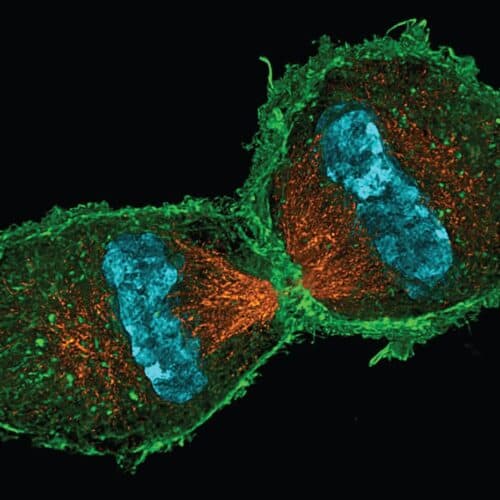
Finally, continuing our series on Buddhism and Science, guest author Jeff Su explores how a Buddhist understanding of phenomena can contribute to the process of scientific inquiry, using examples in the fields of biology and ecology.
Whether you are new to Diamond Way Buddhism or a seasoned yogi, we hope you will enjoy and be enriched by this exciting edition of Buddhism Today!
The Editors
Editorial Board
Editors
Jonathan Bradley, Blakesley Burkhart, Annik Foreman, Carola Hannemann, Bruce Underhill
Art Director/Production
Anilou Price
Digital Director
Alex Katalkin
Copy Editors
Nancy Beall, Annik Foreman, Joe Lyman, Catherine Walker
Graphic Designers
Alex Katalkin, Milla Kicilinska, Anilou Price
e-Publications Editor
Michal Moskal
Photography
Philipp Dronov, Volen Evtimov, Adam Klukowski, Jason Langer, Marcin Muchalski,Ginger Neumann, Gerhard Poschung, Zurich archive
Circulation Manager
Benjamin Ritchey
Marketing and Subscriptions
Ryan Hoffnagle, Jim Macur, Benjamin Ritchey, Jerome Sala
Finance
Benjamin Ritchey
Tech Support
Alex Katalkin, Jeremy Kunzinger

 By
By