Altruistic Thought in Action
A bodhisattva’s way of thinking and acting is based solely on kindness and compassion. His only motivation is to be useful to others. All ordinary beings experience unhappiness. Bodhisattvas, having freed themselves from this experience, wish to help others liberate themselves from it. By following their example of how to act and how to consider situations, we develop our capacities in order to become bodhisattvas in our own right. It is not possible to exist without doing anything; we act in every instant. The goal is thus to orient the mind and to direct our actions toward what is beneficial.
In daily life, a bodhisattva’s way of thinking and acting goes against that of ordinary human beings. This seems strange at first glance, but let us come back to our basic functioning to understand better. As we described in greater detail in the preceding chapters, when a thought arises in the mind, an impulsive feeling comes with it that influences our actions. This is how our typical way of functioning continuously leads to greater unhappiness. However, as this is our natural functioning, we do not think about questioning it or modifying our perspective.
A bodhisattva is also a human being, but he apprehends things according to another point of view: that of others. In this way, his mode of being proves considerably more perfect than our own. Applying enlightened mind does not mean following a bunch of rules. Instead, it refers to developing understanding so that we are able to embody the qualities of enlightened mind. Based on the bodhisattvas’ examples of conduct and concrete situations, we try to apply the same state of mind in relation to our own capacities, without forcing anything. Anyone who wishes to attain the perfection of the bodhisattvas must simply begin where he is. Step-by-step evolution is a guarantee of progress without regression or giving up. Over the course of the path, our way of seeing, but also our expectations and our understanding, change. We become more beneficial for others. Based on this, we contribute to establishing a peaceful state of mind and developing greater harmony in our relationships.
Application in daily life quickly gives rise to the initial results, which encourage us to continue. We witness the good that this brings about for others and for ourselves. Following the perfect conduct of the bodhisattvas to the letter is not immediately within our reach, but neither is it simply a myth. It is certain that one day we will realize this perfection if we train with sincerity. Change can only occur through practical application of this mind training.
Here, we directly connect the method with daily life. The goal is to use every situation to develop our minds—a practice that goes against our habits. Indeed, when facing difficulties, mistakes, or unkindness, our primary reflex is to identify who is responsible in order to reveal the truth of the situation. A bodhisattva does not react this way; he focuses on another goal.
In general, the source of all beings’ suffering is the desire for self-centered happiness. Indeed, if we are honest, we will realize that the cause of our unhappiness comes from being too focused on ourselves. Turning this habit around is not easy.
A bodhisattva does not experience any unhappiness because he is not fixated on himself but instead focused on others. Consider this example of the difference between a bodhisattva and an ordinary being. When an ordinary being acquires a new property, his first reflex is often to put up a fence around his land to protect himself from thieves, animals, and all other potential damage that could occur. We build barriers because we are thinking of ourselves. A bodhisattva or a buddha does not need to put walls up around himself. He is naturally close to other beings without fear or worry. One of the outcomes of kindness and compassion is that we no longer discriminate against others. Because we have not yet sufficiently developed this quality, ordinary beings experience suffering.
The principal practice of bodhisattvas for developing kindness and compassion is that of exchanging self for others. A bodhisattva gives all that is positive and beneficial to others and takes on all that is harmful and difficult himself. This is the true condition and way of life of authentic bodhisattvas. In our case, we use this principle to train concretely in daily life in order to change our states of mind.
This exchange is not a sacrifice we make in order to receive a reward. Considering the training in this way does not allow for evolution and creates tensions that often lead to abandoning the path. The proposed approach only fully functions based on understanding the condition of beings. This is why the preparation explained in the previous chapters is necessary. It is not enough to simply repeat over and over that ignorance obscures the minds of beings and influences their way of acting. We must truly take the measure of this reality. The strength of this awareness allows us to apply the bodhisattvas’ training. The exercise of exchanging self for others, described in detail in the following section, begins with benign situations and progresses through difficult circumstances. As this is not our natural impulse, it requires effort in the beginning.
The goal of training ourselves to act like bodhisattvas is to reveal our own potential. If we do so, at the end of the path we are truly useful to others and capable of reducing their suffering.
Taking Disturbances as the Path
In seventeenth-century Tibet, there lived a great bodhisattva by the name of Choying Dorje, the tenth Karmapa. Numerous political difficulties troubled “the roof of the world” at this time. As the head of the Karma Kagyü school of Tibetan Buddhism, Karmapa Choying Dorje was, of course, involved in these historical issues. At a certain point, the opposition overthrew him and ran him out of the country. His entourage and many of his disciples wanted to support him and fight to reveal the truth, but he prevented them from doing so. He did not want people to commit negative acts so that he could reclaim his rightful position. The tenth Karmapa became a beggar who wandered barefoot like a vagrant. Those who met and recognized him wished to help him. Though he accepted food and clothes, he categorically refused any violence in the name of his reputation. He regularly lost his possessions to bandits, but he always retained equanimity of mind. He never felt sorry for himself or resented those who stole from him. On the contrary, he dedicated his lost belongings to his assailants and profoundly rejoiced that he was able to be of service to them. This leniency is not a sign of moral weakness; it is the practice of bodhisattvas. The tenth Karmapa also habitually redistributed the offerings that he received without preference or discrimination. His sole wish and his sole line of conduct were those of enlightened mind, regardless of the cost to himself.
It is very unlikely that we would act the same way in an identical situation. This conduct may seem strange, shocking even. It is important to keep in mind that a bodhisattva’s wish is to accomplish the benefit of others and to refrain from harming them under any circumstances. The possession of material wealth versus a life of total poverty does not influence their state of mind. In our case, we remain attached to our possessions and our person. Thus, it is difficult to rejoice for the thief who strips us of our cherished belongings. If a pickpocket steals something from us, our immediate reaction is anger. Not giving in to this anger is tricky. The training consists of maintaining presence of mind without giving in to the impulse of the moment. It is not a matter of forcing but of simply beginning with what occurs in our minds. Successful and genuine application in daily life has two benefits. Firstly, this reduces our own unhappiness, as anger is not a pleasant sensation. Secondly, we directly alleviate the karmic consequence of the harmful action of the thief. In fact, if we rejoice that the object he stole from us may be useful to him, the action committed no longer constitutes a theft on his part but a gift on ours. The importance lies in doing so with conviction.
The training is the same if we are accused of a wrong we did not commit. A bodhisattva accepts his fate without seeking to reveal the truth. To do so would lead to the accusation of another, and a bodhisattva’s commitment is to take on the causes of every harmful act in order to alleviate the suffering of beings. An ordinary attitude involves trying to prove the truth because “it’s not fair!” This is exactly the type of reaction that perpetuates unhappiness. Instead, we must work on our states of mind and not on the external situation. Authentic compassion comes with greater discernment. We develop clear perception of what is happening, and this understanding leads us beyond our own vision of things. We do not analyze situations based on external facts, but instead, we ask the appropriate questions based on our goal—becoming a bodhisattva. Then, true compassion arises, and this compassion orients our reaction. Indeed, we become aware of the condition of others and we perceive that their actions stem from their states of mind and that they create the causes of their own future unhappiness. This understanding dissipates all anger and opens the way for compassion.
Likewise, when we are the target of rumors or defamation, the practice of bodhisattvas consists of understanding the ignorance of those behind the falsehoods. We do not seek vengeance, nor do we give in to the disturbance such situations can create in our minds. We are aware of the unpleasant occurrences arising in our minds and we do not succumb to them. Instead, we choose to adopt an unusual line of conduct; we kindly praise the qualities of our aggressors.

If someone reveals our flaws or insults us in public, we do not reject the situation, and we consider the hostile person to be a friend who wishes us well. We use the experience to improve ourselves and to progress along the path. The same goes for a person who disdains us or denigrates our work out of pride.
If a person we have taken care of in the past—even raised as our own child—turns against us, accuses us or betrays us, we do not cultivate anger or desire for vengeance. Instead, we fortify our kindness, like a mother toward a sick child.
All of these points relate directly to our emotional relationships with others and offer opportunities to live based on the attitude of enlightened mind.
When faced with poverty or illness, we may sink into suffering. A bodhisattva’s attitude involves not becoming discouraged or affected by this unhappiness. Instead, a bodhisattva pursues his commitment; transforming these difficulties into the path toward enlightenment by taking on the negative karma of beings while giving them all that is beneficial. Indeed, a bodhisattva has developed the quality of mind that does not experience either pride or discouragement. Fully concerned with his commitment to help other beings, he does not consider himself to be important. His conduct is sincere and spontaneous. Emotional occurrences no longer veil his mind; he is clearly aware of even the most minute causes and conditions in each situation that he encounters.
This level of achievement signifies that one has attained a form of fulfillment. Free from unhappiness, life is pleasant. We manage difficulties more easily. The causes of fear, worry, rejection and anger are not active in the mind. We consider all situations and phenomena with equanimity.
Harmful thoughts always disturb an ordinary mind because it cannot identify their origin. This leads to a lot of confusion and an incorrect vision of things. In terms of pleasant thoughts, we immediately try to grasp them and preserve them; we do not accept that they are fleeting. Bodhisattvas see this identical functioning in all beings. Based on this vision, they generate unlimited compassion. They know that ignorance and harmful acts are the cause of the suffering of all beings.
We may naturally and spontaneously accept the idea of enlightened mind, but its application remains tricky. Therefore, it is important to train progressively so that we do not become discouraged and give up. Wishing prayers also support this exercise. Certain great bodhisattvas expressed specific aspirations for developing enlightened mind, like the Bodhisattvas Samantabhadra and Shantideva. Reading and repeating these wishes anchors their meaning in the mind. In the beginning, saying, “May the poor and destitute find wealth, the haggard and careworn, joy. May confidence relieve those in despair and bring them steadfastness and every excellence. May every being ailing with disease be freed at once from every malady. May all the sickness that afflicts the living be instantly and permanently healed.” This not necessarily natural. Getting used to this habituates us to seeing things in a different way and affects our conduct. Regularly expressing these aspirations reinforces our commitment to the path of kindness and compassion and leaves an imprint of enlightened mind. Little by little, we grasp the signification and our minds connect to the meaning of the words. We then become capable of expressing it through beneficial acts.
Helping others seems normal. However, if we honestly examine our own state of mind, we will realize that our wish to help others often hides an expectation (for recognition, for something in return, etc.), and if we gain nothing from our action then our motivation weakens. The exercise consists of first generating a habit—beginning with small, daily actions without any hope for recompense. Doing so constantly creates a tendency that goes solidly in the direction of enlightenment. Often in daily life, the slightest disappointed expectation or dissatisfaction easily disconnects us from this orientation, and we give in to discontent and frustration. If our irritation persists, it increases, and we cut ourselves off from others. All unpleasant and unhappy conditions come from being overly focused on ourselves. The practice of exchanging self for others, as we described it here, remedies this and uproots the seeds of future unhappiness. This precise understanding of our functioning, as well as the clarity obtained through meditation, constitute a solid foundation for this training and begin the process of transformation.
It is useful to have a reference point that acts as a reminder of the direction we wish to take. Therefore, remember to keep the mind relaxed, whatever the circumstances. It is not about relaxation in terms of leisure but rather relaxing the mind as soon as we see that certain causes and conditions have created tension. A relaxed mind does not give in to the panic of predominant emotional occurrences and naturally remembers what to apply to work with the situation at hand.
Civilizing our Minds
A good mastery of the mind is a key point in this training. This means civilizing the mind’s rebellious habit of following the slightest emotional occurrences. We must implement this discipline gradually; forcing change does not last. If we do not tame our inner passions, outer difficulties only multiply.
A bodhisattva overcomes his anger through kindness and compassion. Because he sees all situations clearly, there is no longer any cause for this emotion to arise. We particularly emphasize anger here because it is one of the principal causes that trigger harmful actions.
In the same way that a bodhisattva does not give in to anger, he likewise goes beyond his personal preferences. He does not entertain them because he knows that the more one succumbs to pleasure, the greater desire becomes. Pleasure is like saltwater; the more we drink, the thirstier we get, and that thirst remains unquenchable. As soon as we have fulfilled one desire, we go in search of a new satisfaction. Cultivating this process creates endless attachment and limitless unhappiness.
Going beyond what brings us pleasure does not mean contenting oneself with suffering. This process instead concerns offering pleasant things to others rather than keeping them for ourselves. This aspect of a bodhisattva’s conduct is part of intelligent generosity. If he notices that someone needs something in his possession, he offers it joyfully, whatever its value.
We act according to dualistic functioning. If we find something agreeable, we wish to acquire it no matter what; and if we do not like something, we want to get rid of it as quickly as possible. Every situation provokes an emotional reaction. This reaction colors the mind as well as the action or words that directly follow. The interdependence of our states of mind and our actions results in the genesis of unhappiness in all its forms.
Observing the way we use our time is an important part of the practice of bodhisattvas. We think and act in every moment. Considering what we do allows us to become more aware of what is happening and to adapt our state of mind and our conduct if needed. If we do not engage in this reflection, the days and months pass without our knowing what we are actually putting in place for our future—what seeds we are planting and what fruit we will harvest. Some kind of self-concern generally motivates our words and actions; pride in some cases, jealousy in others. Understanding this changes our perception and the quality of our communication. Even if our actions are not very harmful, we develop a habit and these seemingly insignificant negativities accumulate, often without our realizing it.
The Six Perfections
We can summarize the previously described attitude of bodhisattvas in six types of training, called the six perfections: generosity, ethical attitude, patience, joyful effort, meditation and discernment. It is necessary to cultivate the six perfections in the mind and also to apply them concretely.
A bodhisattva naturally practices generosity. Free from all attachment, he acts solely based on the needs of others. The generosity in question refers to acting in accordance with what is needed and using all of our available qualities and capacities to be of service to others. Giving refers not only to providing material wealth but also to helping and supporting others—to offering what is needed (time, a thoughtful ear, etc.). It is the complete opposite of maintaining our distance and staying in our comfort zone. Abbe Pierre was a good example of perfect generosity. This quality can take different forms. It is not reserved to the wealthy, but begins with the question, “How can I be useful to others?” Practicing generosity on our level—without expecting a reward—sets in motion a beneficial karmic process for others and ourselves. A first act of generosity acts as a seed, which ripens into a beneficial fruit, and thus generates a dynamic of beneficial action. This attitude of sharing and openness closes the door to unhappiness.
Good conduct or ethical action signifies acting without committing harmful acts. In connection with generous action, ethical conduct allows us to move in a beneficial direction. It guarantees that an action has the proper motivation and orientation. Indeed, an act can be generous without being beneficial, such as the act of giving weapons. Positive ethic thus means maintaining the direction of enlightened mind.
Patience is the third perfection and refers to confronting difficulties without giving up or acting harmfully. In addition to this, when a bodhisattva faces anyone hostile or harmful to himself, he does not allow his mind to consider the person an enemy or to develop resentment. He simply exercises patience without reacting impulsively or negatively, which neutralizes anger.
The notion of joyful effort is part of a bodhisattva’s quality of patience. He does not accept unfortunate situations without reacting. He is always eager to be of benefit. Whatever the difficulty or the length of the task, he works tirelessly without procrastinating on what needs to be done. Joyful effort also implies not becoming discouraged and persevering instead. This quality is an excellent remedy for laziness.
Meditation is the element that causes the previous four qualities to be effective. However, in the context of the perfections, this point does not refer to training in meditation but rather to the result. A bodhisattva with extensive meditation experience remains in a state of mind free from distraction and disturbance. This complete meditative absorption eradicates the seeds of obscuration.
The combination of the first five perfections allows one to develop a powerful potential, that of perfect discernment. Without this clear understanding, we cannot reach enlightenment. Perfect discernment refers to an infallible intelligence, what one could call a perfect mind—a mind completely free of confusion and ignorance. This complete discernment leads beyond unhappiness. We then perceive reality as it is, both in terms of its nature and the diversity of its manifestation. The seeds of unhappiness no longer arise. The concepts of a subject that acts, an action, and an object of action—the basis for duality and unhappiness—dissipate. All that remains is a clear understanding of reality, which becomes the impetus for enlightened activity for the benefit of beings.
Applying these six qualities equates with living in total perfection. The goal is not to devote just a few hours a day or a certain amount of time we have set aside for this application. The bodhisattvas incarnate this perfection in every moment, without vacation or time off. However, we do not yet possess these qualities, but they indicate the direction we wish to follow. It is enough for us to encourage ourselves and to begin to put the qualities into practice according to our present capacities and without becoming discouraged. Doing our best to apply these six perfections allows us to progress along the path.
We do not need a particular context to begin applying the qualities; we can do so anywhere. On our meditation cushion, they act as a reminder. When we interact with others, we concretely put them to the test. All the situations that we encounter in life are opportunities to try to apply enlightened mind. The six perfections are examples of the direction to follow to ensure that we do not get lost. These references help us distinguish what is beneficial from what is harmful.
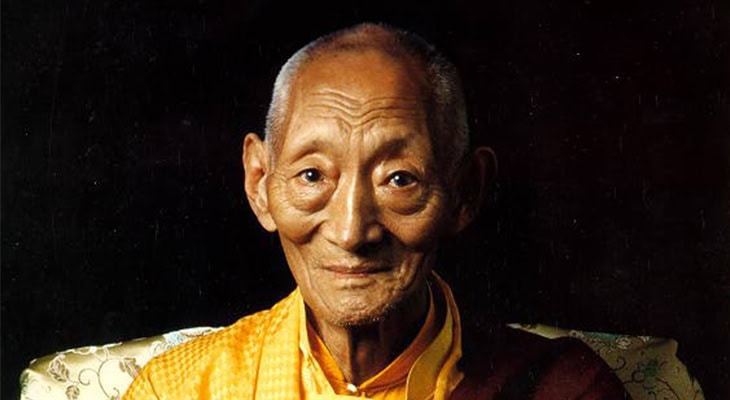
At times, this reality seems so distant from our own lives that it can be tempting to think that all this is just a charming legend. However, this is not the case! Reading biographies of great bodhisattvas like the tenth Karmapa prove the veracity of these explanations. I myself witnessed this perfection in the form of the sixteenth Karmapa (1924–1981). When he lived in Rumtek, in Northeast India, he woke up at 4:30 in the morning every day and rarely went to bed before midnight. He consecrated every minute of his time to others. Without tension or pressure, he simply accomplished what was required. Often this meant receiving visitors—sometimes people who had traveled hundreds or thousands of miles to meet him and make their request. Whether the person was a ruler or a local farmer, he maintained the same quality of attention and listening as he tried to best respond to their questions and appeals. Sometimes, a family would come to ask for rituals for a deceased loved one. The Karmapa immediately took it upon himself to carry out extensive practices for the deceased. In addition to giving to audiences, he was responsible for the education of young teachers; he took the time to transmit the teachings to them and ensured that they understood the words and their meaning correctly. As the lineage holder of the Karma Kagyü, he verified that the programs of study were authentic, the rituals accomplished properly, and the conditions for practice respected. He also traveled around the world to respond to the requests made of him. He never held back for a single moment. Just like the bodhisattvas, he offered his support constantly and without judgment. Sickness and fatigue never phased him.
These great bodhisattvas are extraordinary beings whose role is simple: be useful to sentient beings and offer them what they need without criticism or judgment. Their activity comes from a spontaneous and sincere motivation and enthusiasm toward others that is neither impulsive nor based on attachment. Though we have not yet attained this level of perfection, we can still try to support and help one another, to be attentive, and to improve our listening, etc. Through regular training, we can develop not only good habits, but good karmic conditions. Accumulating beneficial actions reduces negative karma and contributes to preparing for a good future destiny. In this way, we can attain positive life conditions connected to the tendencies of enlightened mind that we have developed in the previous life. Due to this connection, we can once again meet with advantageous circumstances to continue our progress on the path of enlightened mind. Life after life, we can advance in this way until we reach enlightenment.
This way of life requires effort, and we can be lazy at times. Understanding the process of development allows for more diligent application.