It was 2007, and the students of the London Diamond Way Buddhist Center had asked what his vision was for the new London Buddhist center. For nearly a decade, the main representation of H.H. 17th Karmapa Trinley Thaye Dorje (the head of the thousand-year-old Karma Kagyu lineage of Tibetan Buddhism) in the UK had been a small three-story mews house in Holborn, central London. The London Diamond Way Buddhist center had been the venue for many people to learn to meditate, and the crossroads of many life-stories, despite the meditation room being essentially a holy, windowless garage.
The people who meditated at the London center were from all walks of life. Many of us regulars paid a small monthly membership, which covered the electricity, tea bags, and other costs of running a center. We did not have a pot of gold in the back of the cupboard with which to buy a large factory or a warehouse, but what we did have was confidence that this was a supremely worthwhile project.
I see a building made of bricks, a factory or a warehouse would be best, standing on its own with some parking space in front of it, high up or with a hill behind, with a roof like this,” said Lama Ole Nydahl, placing his hands at right angles.
We knew that the meditation methods of the Karma Kagyu lineage had proven just as useful to critical, city-dwelling Westerners as they had to cave-dwelling Tibetan yogis. Diamond Way meditations start with the view that everything that holds us back and limits us is temporary and conditioned. Meditation is the practice whereby the mind is first able to glimpse, and then to fully experience that our real nature is unfettered love, joy, and wisdom, and its expression is power and freedom.
Cosmopolitan London has more than seventy Buddhist centers, catering to all personalities and lifestyles. For energetic, idealistic lay people with the surplus to do something for others, we wanted to make an attractive offer.
For people to really use the methods, they have first to meet them in a context they like. This friendly setting should ideally match the noble lineage from which they came — a meditation center should be simple, elegant, and spacious.
Lama Ole always encouraged us to think big.
Buildings Made of Bricks
We set our sights low at first, for a place maybe twice the size of our current little house or maybe somewhere that we could meditate, but no one could give the place life by being resident there.
Everyone worked together, organizing fundraising activities such as garage sales and sponsored moustache-growing. We also grew the 108 Club, a savings scheme built on small monthly donations, first from our center in London, then the UK, and even well-wishers abroad.
A Company With Only One Product
Steve James, lay Buddhist teacher and founding member of Diamond Way Buddhism UK, kept reminding us that the real point of the project is not to collect money or even to get a building, but to develop as human beings and as friends. In fact, a Buddhist center cannot appear without the conditions being ready—and that means us.
We traveled to large, successful Buddhist centers in Europe (nine countries and counting) and asked them how they found, bought, and ran their centers. As well as learning a lot on our Roadshows, we made a great many friends!
A factory or Warehouse Would Be Best
Every property we found was not quite right, and we had hundreds of discussions, walks around the town, and experienced many dead ends. But through it all we understood that it was not about us and our growing pains, but about what we could offer to others. And such an idealistic vision has tremendous power; it must manifest.
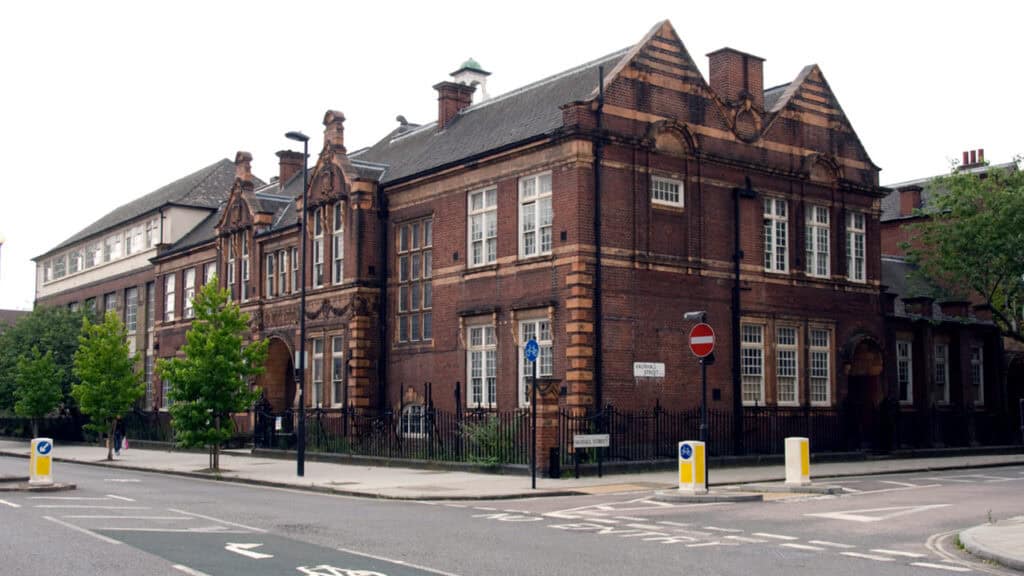
In spring 2011, four years after Lama Ole’s prediction, we found the Beaufoy Institute. A distinguished building, it was built in 1907, at the height of the arts and crafts movement in England, and stands solid, made to last another hundred years. Originally a school for underprivileged children, it was used during the Second World War as a munitions factory, before eventually fading into disuse.
We fell in love immediately, but like most love affairs it was not straightforward. Incredibly, our little savings scheme, made from what our friends could spare over the years, now totaled more than half a million pounds, but this beauty was higher maintenance than that.
With some help from friends abroad, generous sponsors, the Diamond Way Buddhism Foundation, and a responsible business plan, we were able finally to buy the center of our dreams.
The Beaufoy Institute, once restored to its former glory and renovated, will be 2,600 square meters, with a meditation hall of over 200 square meters, making it the largest Buddhist center in London.
In July 2012, immediately after we got planning permission to renovate and restore this great building, H.H. 17th Karmapa flew into London for a well-attended UK tour, and H.H. Karmapa, Lama Jigme Rinpoche, and Lama Ole Nydahl took a tour around the building.
Sherab Gyaltsen Rinpoche, an important Buddhist teacher from Nepal, came in July 2013 and gave many great teachings, as well as the first Buddhist empowerment in the new place.
Buddhism in the Community
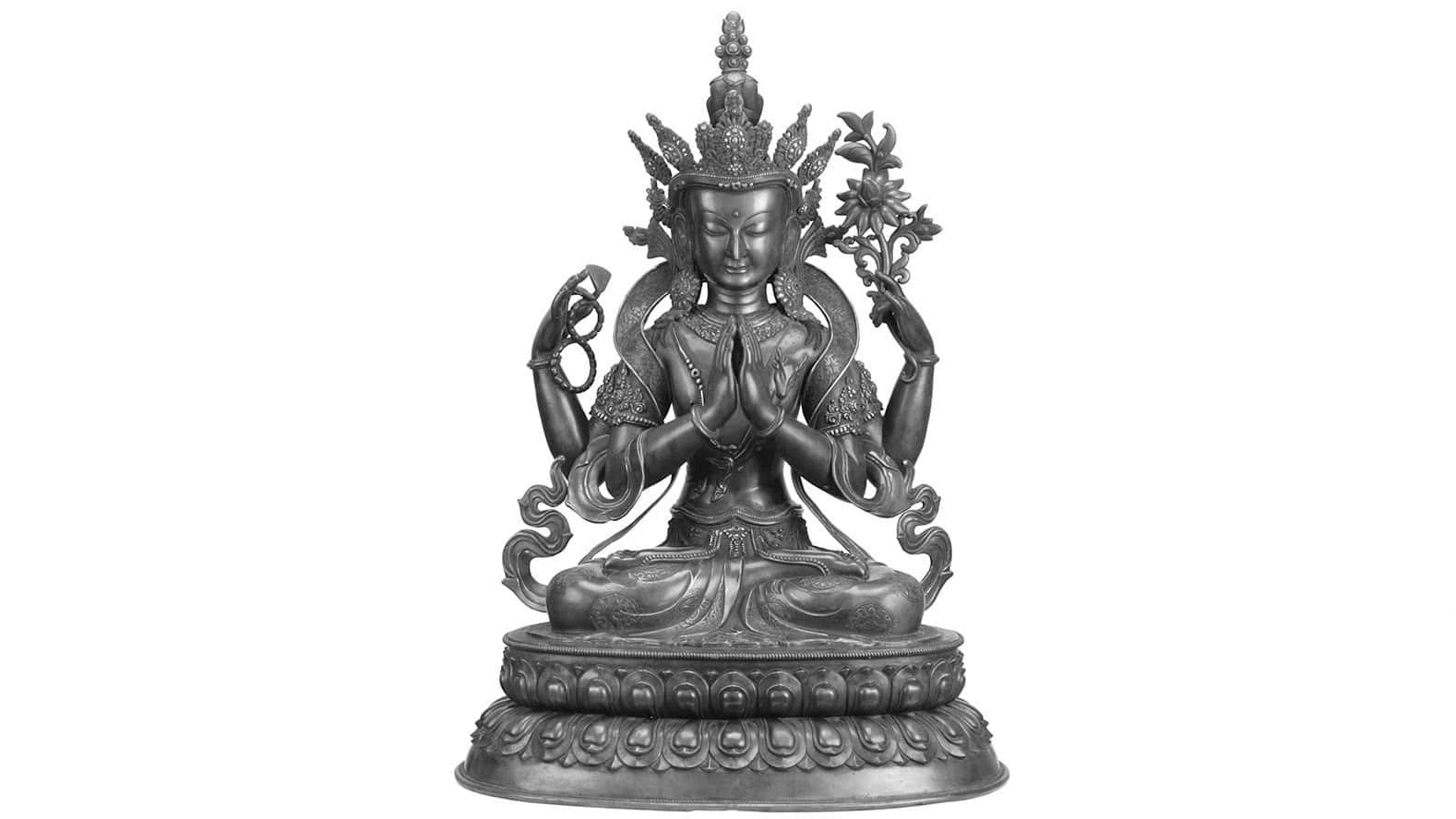
Our success in getting the place was in large part because of the benefits the center can bring to the local community, and the friendships we made. Over some months we met with local people face-to-face to discuss our plans, get their ideas and answer their questions. With tremendous support, a fabulous statue exhibition was also held with the highest quality statues from all over Europe. We gave guided tours around the building in our Open House Days, and everyone in the surrounding community was excited to see a local landmark coming back to life.
Our tireless volunteers have a lot of work ahead before the renovation of the Beaufoy is finished. But it will be worth it. As Lama Ole says, “This is a living piece of culture. It’s a place where we’ll grow, where all kinds of wonderful things will happen… on the highest levels of idealism and human growth, and all the other values that are really important.”