Introduction from Lama Ole Nydahl
Diamond Way Karma Kagyu Students and Friends,
Following the example of our immeasurable 16th Karmapa is the wisest thing we could have done. Since 1969 it has offered us countless and varied opportunities to remain clear, incorruptible and true to our values. In the process we also learned to fathom the behavior of highly titled teachers, even when they involved themselves in schemes that were not to be expected.
With The Biographies of Rechungpa by Peter Alan Roberts, Ph.D., from Samye Ling in Scotland, we are again presented with high drama for taboo-free reconsideration, this time covering centuries of historical manipulation of our authentic Kagyu roots, starting with texts from the Drukpa Kagyu lineage. The text examines material that we would nowadays recognize as a conspiracy of the politically correct against an inconvenient freethinker, an Orwellian tendency that seems as old as communication itself.
The more our official history balances the actual facts and brings the full blessing-stream of our lineage, the wider, deeper and clearer will be our transmission on all levels, and its benefit for beings. For that reason such embarrassing but very human behavior—which jumps into our faces most days from our press—should be unmasked here also. But not every cause for the increased pace of alterations in the texts during the last centuries will be found in the discomfort of well-regulated Kagyu monasteries with the free and annoying yogis, to which noble company both Milarepa and Rechungpa belonged. When, during the time of our European thirty-year war in the seventeenth century, the seats of the three old “Red-Hat” yogi-schools of Tibet had been destroyed by the armies of the Mongolian warlord Gushri Khan (invited by the government of the 5th Dalai Lama) things naturally relaxed. With the 11th Karmapa, reconstruction was allowed to slowly start—but certainly under strict surveillance by the “Yellow-Hat” Virtuous School, now the Tibetan government. They would certainly have ensured that our side would not present something to which their organization had no counteroffer—unpredictable and exciting yogis, the very life blood of our transmission—and so they further “doctored” the texts in that direction.
Let us thank Peter Alan Roberts, famous for his exciting and meticulous research on Rechungpa, and our highly esteemed Professor Rosi Fischer from Regensburg, supported by Manfred Seegers, for her delivery of this readable summary, which so practically brings us back to our genuine Kagyu roots. This book and her summary are therefore precious.
Actually today such disclosures hardly touch our Diamond Way. Our results in the fulfillment of the great 16th Karmapa and the 17th Karmapa Thaye Dorje’s wishes to a large extent spring from the fact that, right from the beginning, Hannah and I drew our main historical inspiration from Tilopa and, especially, from the hero Marpa. Marpa’s example of guru yoga, combining a rich and active life with the ultimate meaning of the Great Seal of Mahamudra, and the inspiration of our Kagyu yidams ensures that the utmost and timeless benefit is drawn from any hopeful life also in the world today.
Europe Center, August 15, 2011
Yours,
Lama Ole

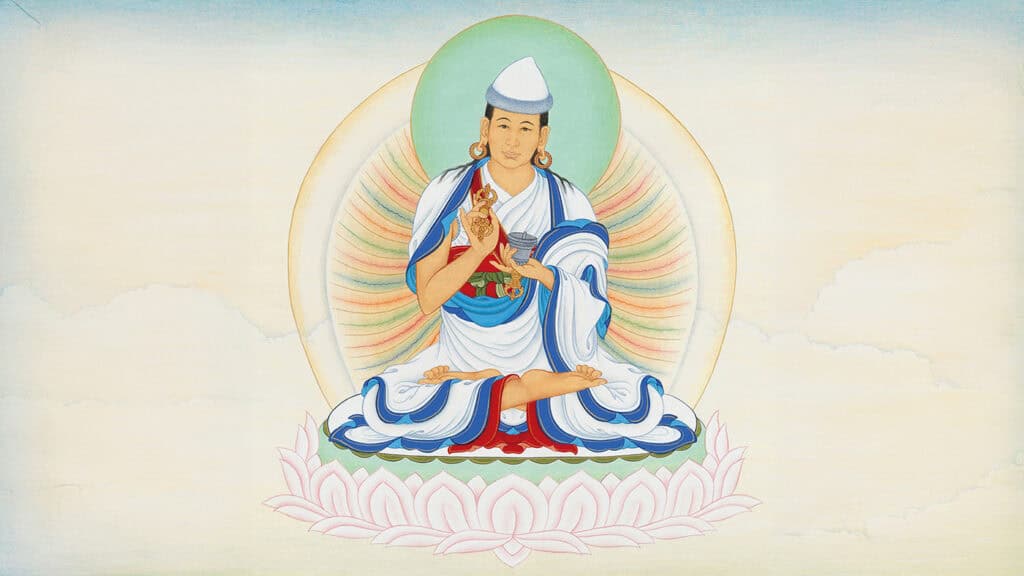
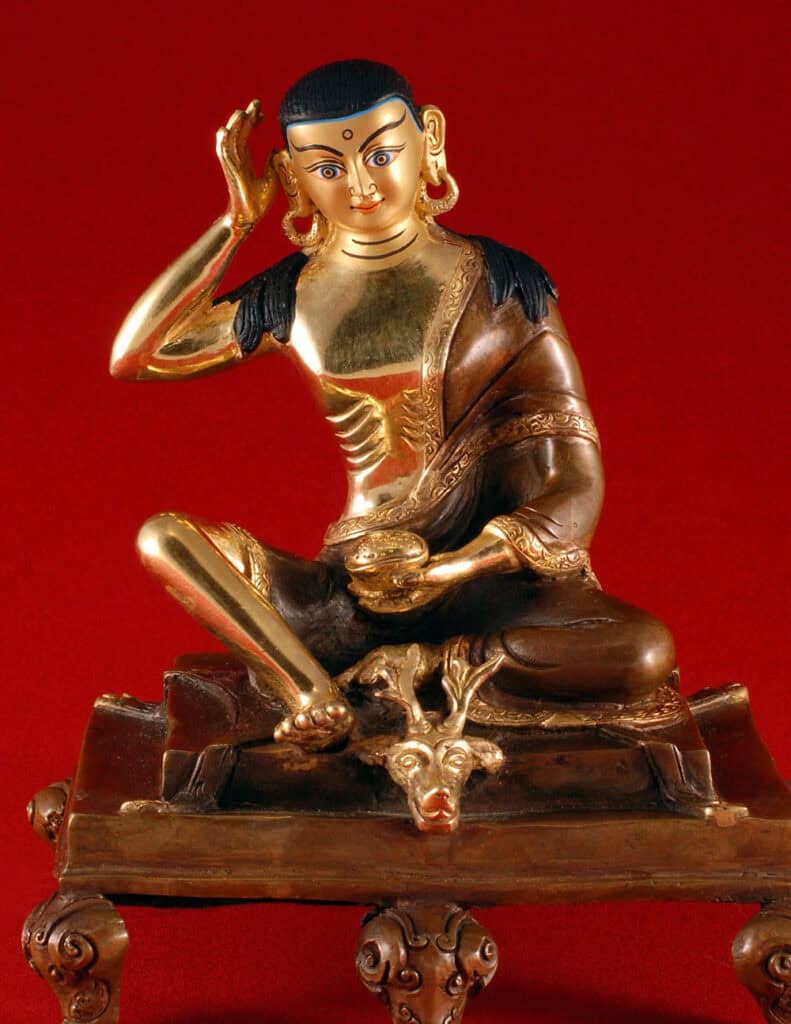
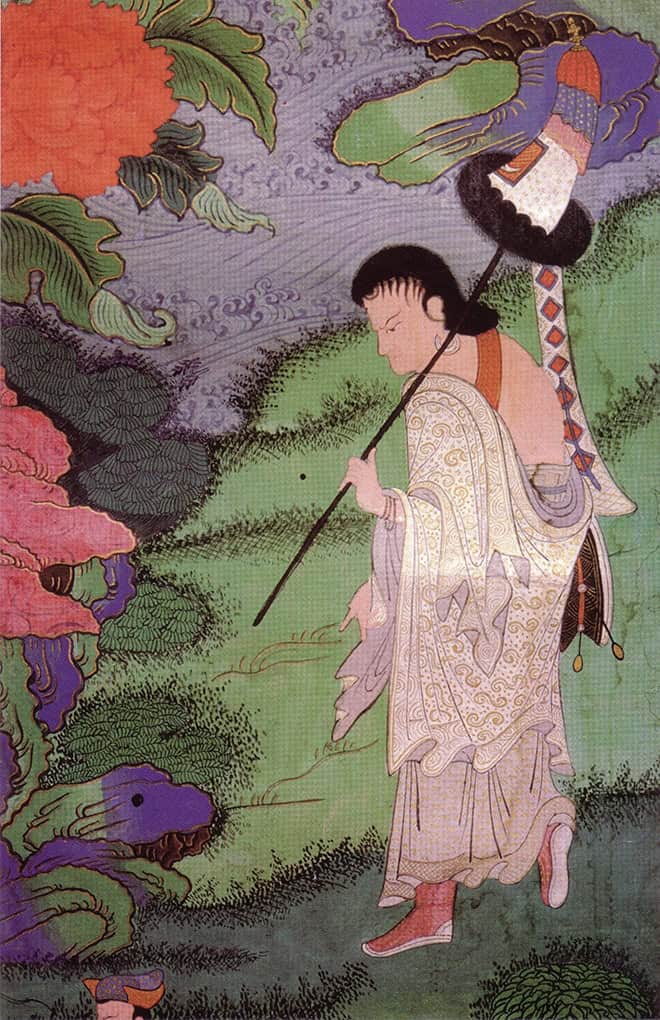
What we know of Rechungpa today comes mostly from three books: The Life of Milarepa by Tsangnyön Heruka, The Hundred Thousand Songs of Milarepa, also by Tsangnyön Heruka, and the life story of Rechungpa by Götsang Repay, a student of Tsangnyön Heruka. According to these sources, Rechungpa, although highly gifted and good-looking, was of difficult character. He is assumed to have been proud, stubborn and short-tempered. These three texts, already widespread in Tibet, have recently been translated into English and other languages and are now well-known throughout the world. But few know that there exist many other sources in which Rechungpa appears in a totally different light.
In his 2007 Ph.D. thesis, The Biographies of Rechungpa, Peter Alan Roberts meticulously examined and compared more than thirty partly unpublished Tibetan sources on Rechungpa dating as far back as the thirteenth century. His detailed research unearthed some stunning results. According to several previously unknown sources, Rechungpa was not only Milarepa’s most important pupil, but also his teacher, and he received important transmissions which he passed on to the Kagyu masters.
Two biographies of Rechungpa written by his pupils in the twelfth century have been lost. Together with other oral and written sources, these texts presumably served as a model for a number of life stories of Rechungpa, Milarepa, and other Kagyu lineage holders. The existence of several narrative (oral) traditions can be deduced from the existing source texts.
The first important tradition is based on an account of the Drukpa Kagyu lineage, the Biographies of a Garland of Golden Mountains, from the yogi Gyadangpa (early 13th c.).
The second is the Great Kagyu Biographies, recorded by Dönmo Ripa (mid-13th c.).
A third tradition is based on the Life and Songs of Shepay Dorje (anonymous, 14th c., hereafter referred to as Shepay Dorje), along with two follow-up texts: The Life of Milarepa and The Hundred Thousand Songs of Milarepa by the Drukpa yogi Tsangnyön Heruka (late 15th c.).
In brief, the texts of the Gyadangpa tradition depict Rechungpa relatively positively, while those of the Dönmo Ripa tradition are short, factual and neutral (Clouds of Blessings, on the life of Milarepa by the second Shamarpa Khachö Wangpo, belongs in this group). The Shepay Dorje text portrays Rechungpa more negatively in some places and, surprisingly, more positively in others, and the ensuing texts by Tsangnyön Heruka describe Rechungpa relatively critically. Our current knowledge of Rechungpa is based on the latter. However, due to their early dating, logical narrative structure, clarity and simplicity of style, Roberts considers the sources of the first two traditions to be more trustworthy than those of the Shepay Dorje tradition. On the other hand, Roberts considers the texts of the Shepay Dorje tradition to be more reliable than the texts of Tsangnyön Heruka and his students.
Five key episodes from the relevant text sources demonstrate how the depiction of Rechungpa changed from the twelfth to the sixteenth century. (There are many more text sources and passages; however, they are not all cited in this article.)
A Kadampa Monk Attacks Milarepa
The Gyadangpa text recounts the Kadampa scholar monk Tönpa Darlo entering into a debate with Milarepa, losing, becoming angry, and attacking him. Milarepa’s students want to fight him, but Milarepa holds them back to prevent further escalation.
In the Shepay Dorje text, two scholar monks are mentioned, and it is not Tönpa Darlo but the other monk who attacks Milarepa. Milarepa’s pupils—literally, “all Rechungpas,” where Rechungpa means “younger cotton-clad yogi or pupil” in Gyadangpa—now become one pupil: Rechungpa. The text de-emphasizes the bad behavior of the monk and constructs an alleged wrongdoing of Rechungpa, who wants to beat the monk. However, Milarepa prevents this. It says, “Rechungpa’s fierce pride was pacified and he meditated on patience.” (p. 142f.)
Tsangnyön Heruka’s later Hundred Thousand Songs of Milarepa dramatizes the event even further: Rechungpa wants to kill the monk. In a later text (A River of Blessings, anonymous, late 15th c.), it states that Rechungpa decides to go to India to study the art of debate, to be able to defeat the monk. However, Milarepa tells him that debating is not only useless but also harmful. It further asserts that Rechungpa wants to learn sorcery in India to fend off the attacks of the monk. The theme of Rechungpa going to India to study logic or sorcery occurs repeatedly in later texts.
The ambiguous term Rechungpa—which can mean “younger pupil” but can also be the proper name of the yogi Rechungpa—may have been the starting point for later misinterpretations. However, this does not explain why Rechungpa has been portrayed so negatively. Roberts suggests that teacher-student episodes such as the one above were intended to emphasize Milarepa’s uniqueness and superiority. Perhaps it is also a factor that Milarepa was the lineage holder. In addition, he was Gampopa’s teacher, and Gampopa, at least according to the Dagpo Kagyus, was the founding father of the Kagyu lineages.
Rechungpa Goes to India
In Gyadangpa’s text it says that Milarepa asks his pupil Rechungpa to go to India to receive the five teachings of the dakini queen, teachings that Milarepa had not received from Naropa. For this purpose, gold had to be collected to be given to the Indian master. Before the departure, Milarepa assigns Rechungpa the higher throne, sits on the lower one himself, and offers Rechungpa the collected gold, thus reversing the existing student-teacher relationship.
In contrast, in the Shepay Dorje text Rechungpa goes to India to learn the arts of debate and sorcery. When leaving, Rechungpa does not sit on the higher throne, but rather on a lower throne, and Milarepa does not offer him the gold.
Rechungpa Comes Back From India

Gyadangpa writes that when Rechungpa returns from India to Tibet, Milarepa comes to greet him, and Rechungpa gives Milarepa the collection of texts he has brought back. Then Milarepa sends Rechungpa to fetch water, and while Rechungpa is absent, Milarepa burns all the texts except for the dakini teachings. When Rechungpa comes back from fetching water, he thinks that Milarepa has burned the whole manual. However, Milarepa explains to him that it was necessary to destroy the texts, since too much studiousness is harmful and distracts the yogi from the essential issue. He then shows that he is able to make the texts reappear any time he snaps his fingers. Rechungpa rejoices, sings a song in praise of the meditation practice of the dakini teachings and declares the negative consequences of book-learning.
In the Shepay Dorje version we suddenly find a teacher-student conflict, in which Rechungpa loses confidence in his teacher and also behaves strangely in other respects. Rechungpa returns from India with a manual that includes sorcery teachings, and expects Milarepa to bow to him, which Milarepa refuses to do. Rechungpa is offended and explains that he has received very precious teachings in India. Milarepa criticizes him for his pride, and Rechungpa is willing to give in. Now a new scene is added: Milarepa asks Rechungpa to pick up a yak horn from the ground. Rechungpa protests, but picks it up. Then a hailstorm begins and Milarepa is able to shrink himself to find protection in the yak horn, while Rechungpa gets wet. Rechungpa complains because he thinks that Milarepa wanted to punish him with a hailstorm for having learned sorcery in India. Again, Milarepa rebukes him.
Now comes the episode of the text-burning. Here, Rechungpa completely loses his faith in Milarepa and turns his back on him. At that point, Milarepa performs five miracles, but Rechungpa is unmoved. When Milarepa finally disappears into the sky, Rechungpa is overcome with regret, and wants to die. Eventually, Milarepa returns, and Rechungpa’s confidence is restored.
In later texts of the Shepay Dorje tradition, new dramatic elements occasionally appear. For instance, in one text Rechungpa secretly keeps a text of the manual for himself, but Milarepa sees through his game. In another, Rechungpa decides to go back to India to learn sorcery; or he wants to be with Tipupa again, because Milarepa is treating him so badly. In one source he even wants to commit suicide after Milarepa disappears into the sky. Rechungpa slips into the role of someone undiscerning and stupid. These scenes could originate from a comic tale, which in those times surely provided much common amusement.
Rechungpa Bids Farewell to Milarepa
Beginning again with Gyadangpa, Rechungpa is sent to central Tibet by Milarepa, who is now aged. After Rechungpa is gone, Milarepa complains in a song that Rechungpa has shamefully left him alone. When the listeners are distressed, Milarepa calms them down and tells them that it was a joke, since he himself had sent Rechungpa away.
However, the Shepay Dorje text says that Rechungpa wants to leave, and will not change his mind even when Milarepa begs him to stay.
When Rechungpa meets Milarepa for the last time, Milarepa transmits all his teachings to him, except one, which he gives him while saying good-bye: Milarepa shows Rechungpa his callused behind, which resembles “a monkey’s bottom” (p. 214). But in Tsangnyön Heruka’s Hundred Thousand Songs of Milarepa, Rechungpa is replaced by Gampopa—and this is the story as we know it today.
Rechungpa and Gampopa are Dreaming
The following episode illustrates the different presentations of Milarepa’s two pupils, Gampopa and Rechungpa.
According to the Shepay Dorje text, one day Milarepa asks Rechungpa and Gampopa about their dreams. Rechungpa dreams that he blows a conch while riding a salt-laden donkey, which means that his fame will pervade the whole world. Gampopa dreams that he stands on top of a white rock at sunrise and that vultures circle him, which means that he will help many pupils at a great rocky mountain.
Furthermore, the colophon of the Shepay Dorje text states that Milarepa had four great heart sons, and Rechungpa has the first place in the list. In addition, eight close sons are enumerated, and finally six more pupils from the end of Milarepa’s life are also mentioned—one of them is Gampopa.
In Tsangnyön Heruka’s Hundred Thousand Songs of Milarepa, the dream episode is presented in a completely different way. Rechungpa’s dream takes place at the junction of three valleys. He calls out loud (instead of blowing a conch), and there is no salt-laden donkey either. This time Milarepa interprets the dream to mean that Rechungpa will be reborn three more times in three valleys because he has disobeyed Milarepa three times. Gampopa dreams that he will kill many people, which is considered very auspicious by Milarepa, who declares that at last a son has been born to him and his life’s work has now been completed.
Tsangnyön Heruka (who follows the tradition of Gampopa) deviates sharply at this point from his model text Shepay Dorje, possibly using other written or oral lore as his basis: Gampopa continues Milarepa’s work, while Rechungpa is portrayed as a disobedient student. Tsangnyön Heruka also writes that Gampopa is Milarepa’s sun-like pupil, and Rechungpa Milarepa’s moon-like pupil.
Overall, it can be said that according to the comparatively older and presumably more trustworthy sources Rechungpa was an exceedingly important and honorable pupil of Milarepa—according to the Shepay Dorje text, even the most important one. Considering the transmissions which Rechungpa received from Milarepa and passed on, this impression is confirmed.
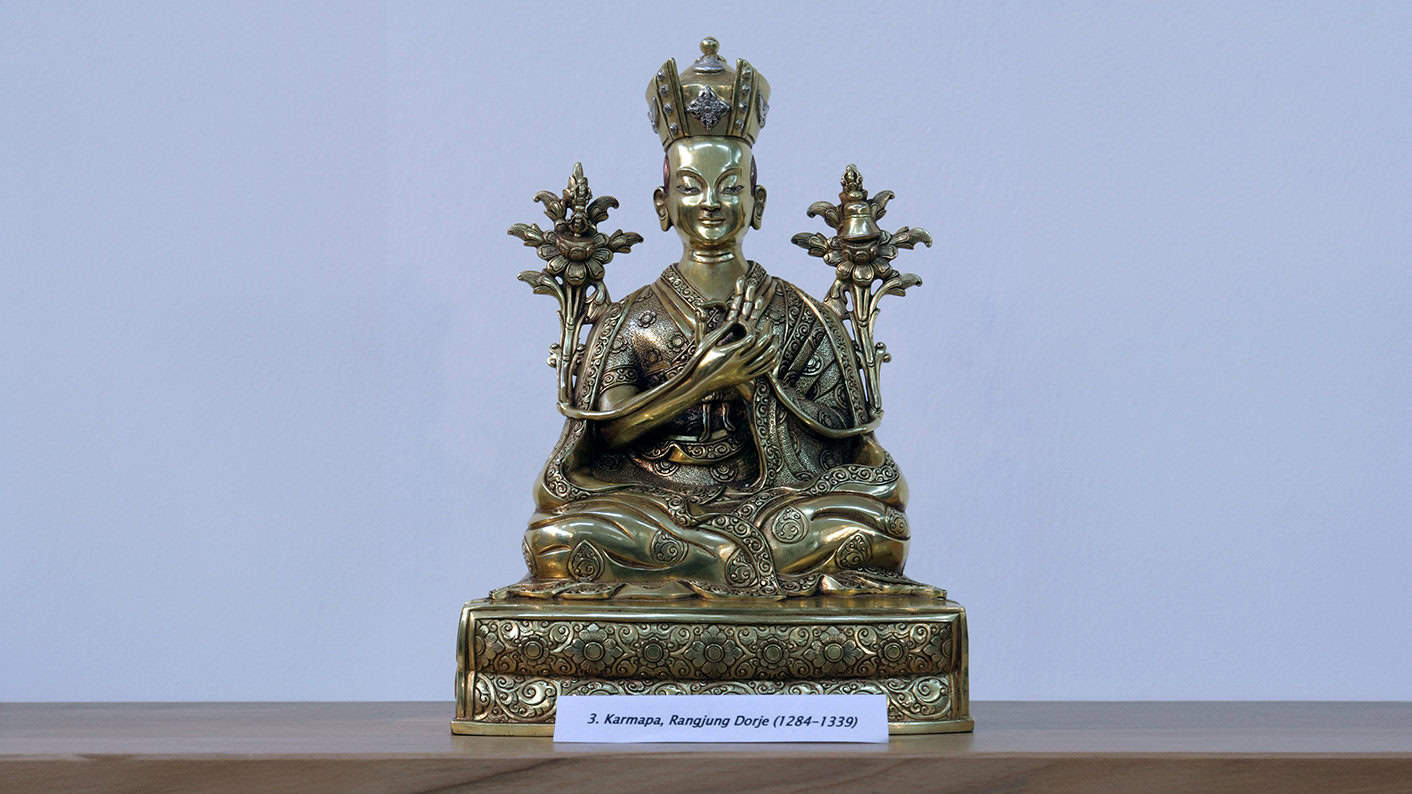
Milarepa gave Rechungpa all his transmissions. In addition, Rechungpa had received the meditations on Highest Joy (Tib. Khorlo Demchog, Skt. Chakrasamvara), and Red Wisdom (Tib. Dorje Phamo, Skt. Vajravarahi) from Tipupa, which included the Nyengyu or Karnatantra (approximately translated as “the teachings of the bodiless dakini through listening”) as well as sexual practices. He received the Mahamudra transmission later in Tibet from Asu, a Nepali student of one of Maitripa’s students. Rechungpa established the Rechung Nyengyu or Karnatantra lineages, which continued independently on a small scale. Furthermore, his transmissions form an important part of some Kagyu lineages, in particular the Drukpa Kagyu and Talung Kagyu. The Karma Kagyu lineage also has close connections to Rechungpa. The 1st Karmapa, Dusum Chenpa, in addition to being a student of Gampopa, was also Rechungpa’s student. The 2nd Karmapa, Karma Pakshi, received the empowerment on the buddha form Almighty Ocean (Tib. Gyalwa Gyamtso, Skt. Jinasagara), which became a main meditation form of the Karma Kagyu, from a student of Rechungpa. Further transmissions originating from Rechungpa were also received by the 3rd Karmapa, Rangjung Dorje. The Karma Kagyu also gave rise to the Surmang Kagyu lineage, which is based on a transmission of Rechungpa’s Karnatantra. The yogi Mingyur Dorje, who was closely related to the 10th Karmapa Chöying Dorje, wrote the meditation on the 2nd Karmapa according to a vision, and Rechungpa is a major figure in the mandala of this meditation.
As the biographies of the Karmapas describe, the 1st Karmapa had many outstanding teachers of the Nyingma, Marpa and Kadampa traditions. Like Gampopa, he was a monk and founded his own monasteries. He received Marpa and Kadampa teachings and the transmission of Oh Diamond (Tib. Kye Dorje, Skt. Hevajra) from Gampopa, as well as teachings from Naropa and Maitripa through Rechungpa. The three main meditation forms of the Karma Kagyu lineage, Highest Joy, Red Wisdom, and Almighty Ocean, as well as the Mahamudra, go back not just to Gampopa but further to other teachers including Rechungpa.
So how then can the prominent role of Gampopa within the Karma Kagyu lineage be explained?
The eleventh century saw the founding of monasteries of the New Translation Schools of Buddhism in Tibet. Though Buddhism had already come to Tibet with Guru Rinpoche (Padmasambhava) in the eighth century, it was prohibited and almost wholly destroyed by the Bön King Langdarma a century later. Only in the late tenth century did Buddhist masters arrive from India with new translations, and Buddhism was revived. In the eleventh and twelfth centuries, many Kadampa monasteries, which focused on intensive scholastic education, were built all over Tibet. From time to time there were disputes between the monks and the repas, as described in the biographies of Milarepa. Milarepa was not only attacked by the Kadampa monk Tönpa Darlo, but on one occasion he was also beaten up by monks of a Kadampa monastery.

The revitalized Buddhism established ever more monasteries in Tibet over the next few centuries, which is significant because monasteries had power over the written word. New transmission lineages came into being, and monasticism and scholasticism increasingly gained in importance. This development is also reflected in the interpretation of history. Reading errors into the old, possibly damaged or dialectal sources certainly also played a role, as did the enjoyment of story-telling and dramatizing. Furthermore, the practices of the yogis were largely kept secret; therefore the monks and others record-keepers did not find out about them and thus could not write anything down.
Assuming that the newly examined sources depict Rechungpa at least in part correctly, Roberts’ study can be given credit for showing that Rechungpa’s role has been undervalued in Tibetan Buddhism over many centuries. This could also mean that lay Buddhism in Tibet can be estimated considerably higher than has previously been presented by the monastic traditions.
Probably the life stories of Buddhist masters should in general be taken with a grain of salt, but they can inspire us on our way to enlightenment. Moreover, the decision to name a particular master as the one lineage holder may simplify matters to a certain extent and may result from the cultural and historical situation. The system of lineage holders goes back to India, where there was only ever one lineage holder, and consequently there were many more lineages. Only in Tibet was this principle changed. It is true that officially there was still a main lineage holder, but there were also many others who could be even more highly placed in terms of certain transmissions. It will be interesting to see what influence lay Buddhism, which is spreading widely in the modern world today, will have on transmission lineages in the future.