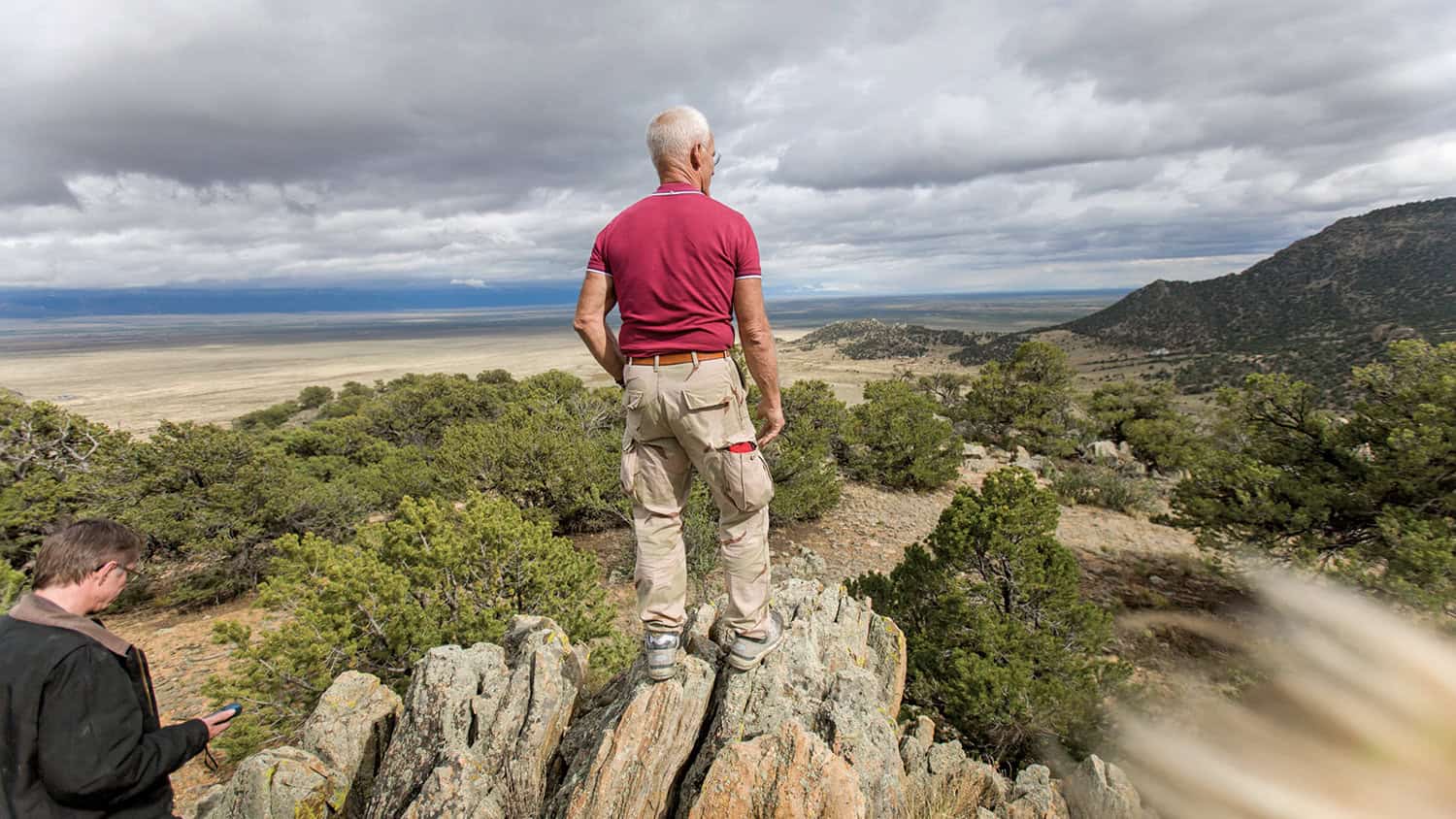
In 2007 the Diamond Way Buddhism organization purchased land in the foothills of the Alps of southern Germany, with the intention of becoming the center for Diamond Way Buddhist activities worldwide. Situated on a hill facing the Alps and the Alpsee lake, Gut Hochreute (“the Manor at Hochreute”) is surrounded by large meadows and extensive forests. The setting is beautiful and the view is breathtaking.
It is here that the Europe Center project has unfolded. The project goal is to preserve the living transmission of Diamond Way Buddhism of the Karma Kagyu lineage of Tibetan Buddhism. It is an international meeting place for Diamond Way groups from around the world. It operates under the guidance of Lama Ole Nydahl, who is under the guidance of H.H. the 17th Karmapa Trinley Thaye Dorje.
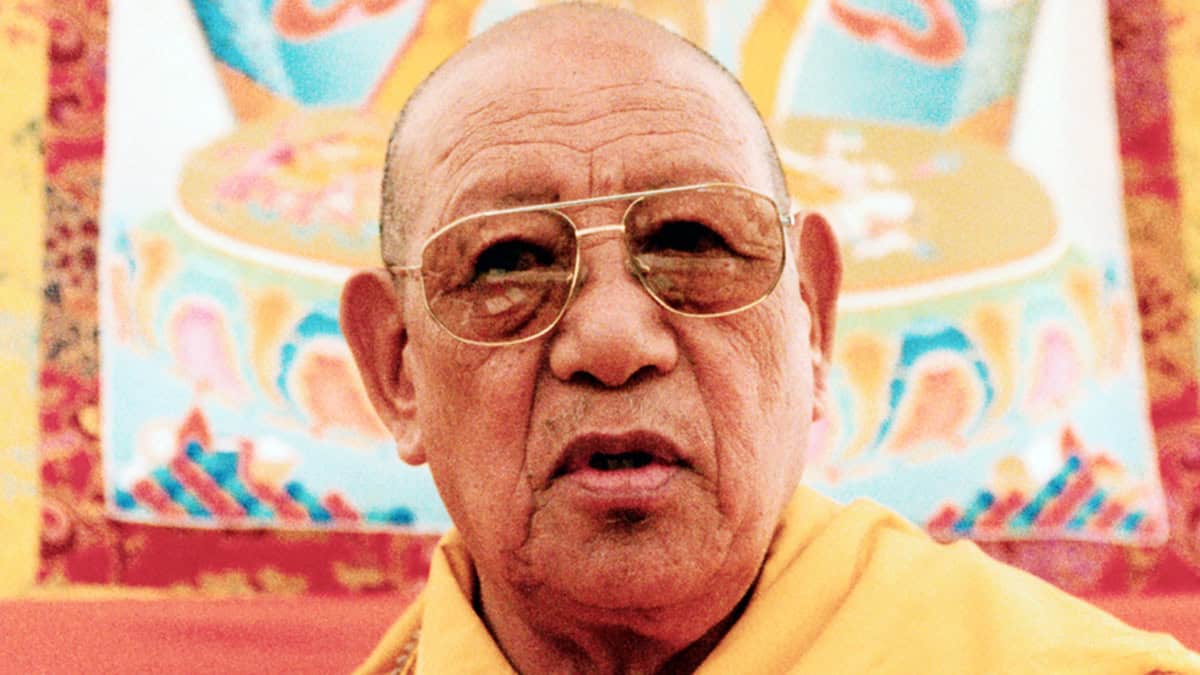
Over the past several years, the Europe Center has become a place where Buddhist practice grows and deepens and where the transmission of Tibetan Buddhist teachings of the Karma Kagyu lineage takes place. This transmission is secured by Lama Ole and by the qualified lamas of the lineage. This includes, above all, the 17th Karmapa, along with the Tibetan lamas: Sherab Gyaltsen Rinpoche, Jigme Rinpoche, and the late Shamar Rinpoche.
During the 2014 international summer course, Sherab Gyaltsen Rinpoche and Lama Ole inaugurated the newly renovated gompa (meditation hall), along with the recently arrived statue of Buddha Shakyamuni and the Stupa of Long Life, or Complete Victory.
The Gompa
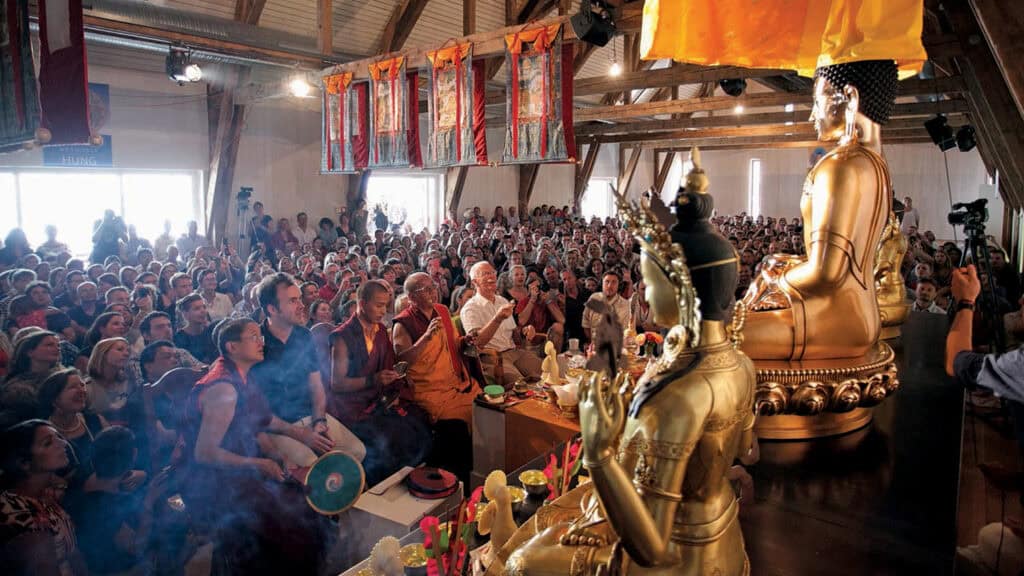
In a beautiful ceremony on August 10, 2014, Sherab Gyaltsen Rinpoche and Lama Ole inaugurated the gompa at the Europe Center. In addition, they unveiled the new and unique Buddha statue.
This new space for meditation was built in an old barn. The renovation was done without losing the character of the building, which was once used for agricultural purposes. Since this is a historically protected building, the Europe Center abided—and happily so—by the required regulations. Thus the special architectural, historical, and cultural significance of the barn has been preserved.
For the inauguration ceremonies, the gompa was beautifully decorated with sixteen thangkas depicting the lineage of the Karmapas, and pictures of the five Dhyani Buddhas, which indicate the five directions according to Buddhist cosmology. In his introductory speech before the consecration ceremony, Rinpoche addressed the significance of this place and how it connects Diamond Way Buddhist practitioners from around the world. He noted the auspicious circumstances present—bringing together the day of a very special full moon, the 16th Karmapa’s birthday, the inauguration of the meditation hall, and the unveiling and blessing of the 1.7-meter-high, shiny new Buddha statue.
As people left the gompa, everyone was presented with a Tsatsa (Tibetan half-relief) of the 16th Karmapa Rangjung Rigpe Dorje, relics, and blessing strings.
The Statue
It is the wish of Lama Ole to have sister statues, based on the Buddha Shakyamuni statue in Bodhgaya, that would connect Diamond Way centers worldwide, thereby strengthening Diamond Way activity and practice far into the future. The statue in the Europe Center is the first of six Buddha statues to be displayed. The second one was inaugurated in Hamburg in December 2014 and the third, in London in March 2015. Three more are planned—for Budapest, Moscow, and Amden. No project of this kind has ever been undertaken in the West.
The six statues are identical, and the metal (a mix of bronze, copper, and brass) is of the exact same thickness throughout. The statues shine more brilliantly than other statues because of a process called anodizing, which increases the metal’s resistance to corrosion and wear.
Sherab Gyaltsen Rinpoche has applied his wealth of skill and experience in this field and has been of central importance throughout the project. All the items for filling the statue were collected from many centers and sanghas around the world; one could say that the world sangha worked together. Mantra rolls were produced in the centers. Many friends gave jewels or dried flowers and herbs from their gardens. During the 2014 summer course, everything was brought to the Europe Center.
The project has involved pioneering uses of Western technology. Beginning with 3-D image modeling, with the input of Lama Ole, the statue was designed with Western features. Using the most advanced technology and Swiss precision, the outcome is an unparalleled combination of beauty and solid engineering.
Whereas stupas are usually positioned in high places with a view and the ability for the wind to carry their blessing, they are typically not meant for cities. Therefore, in a sense, these six statues will act like stupas. A further quality of the statue is that it will magnetize wealth and abundance. Filling the statue will contribute to both temporary and lasting benefits for all who participate in, or have a connection to, this activity.
The Stupa
In a traditional ceremony on August 20, 2014, Sherab Gyaltsen Rinpoche and Lama Ole inaugurated the Stupa of Complete Victory at the Europe Center in the presence of hundreds of friends. This stupa was built under the direction of Lopön Tsechu Rinpoche, who passed away in 2003. It was originally part of the stupa project in Switzerland.
In 2001, the Swiss sangha built seven stupas together with Lopön Tsechu Rinpoche, who inaugurated all of them in Zurich. Each center in Switzerland was to receive a stupa. The Stupa of Enlightenment was meant for Lucerne. When Rinpoche heard this, he did not approve. “The Stupa of Enlightenment is for your retreat place,” he said. The Swiss Diamond Way Buddhists were a bit confused since they neither possessed a retreat place nor planned to have one. Rinpoche did not respond to the objections, and insisted.
So it happened that the Lucerne sangha received the Stupa of the Buddha’s Descent from Tushita (the god realm), and the Stupa of Enlightenment remained in the Stupa yard of the Diamond Way Buddhist Center in Zurich.
Six months later, during a meeting of the Swiss sangha at the Buddhist Center in Schwarzenberg, Germany, the wish for a Swiss retreat center emerged. Later, in Karma Guen in the summer of 2002, Rinpoche precisely described the features of the retreat center. Unfortunately, Rinpoche never experienced the retreat center in Amden. But the Stupa of Enlightenment made its way to the Amden Retreat Center, in line with Lopön Tsechu Rinpoche’s vision.
The Stupa of Long Life, or Complete Victory, originally blessed and inaugurated by Lopön Tsechu Rinpoche in 2001, has now been given to the Europe Center by the sangha of Bern, Switzerland. The Stupa of Long Life is one of the eight classical forms of Tibetan stupas representing significant events in the life of Buddha. It commemorates Buddha’s successful prolonging of his life by three months following the request of his students. Sherab Gyaltsen Rinpoche pointed out that this stupa is also dedicated to the long and healthy life of Lama Ole. Furthermore, he reminded us how immeasurably beneficial a stupa is, not only to the people who circumambulate it, meditate close to it, and make wishes for the benefit of all in its proximity, but actually for the whole region and all beings inhabiting it.