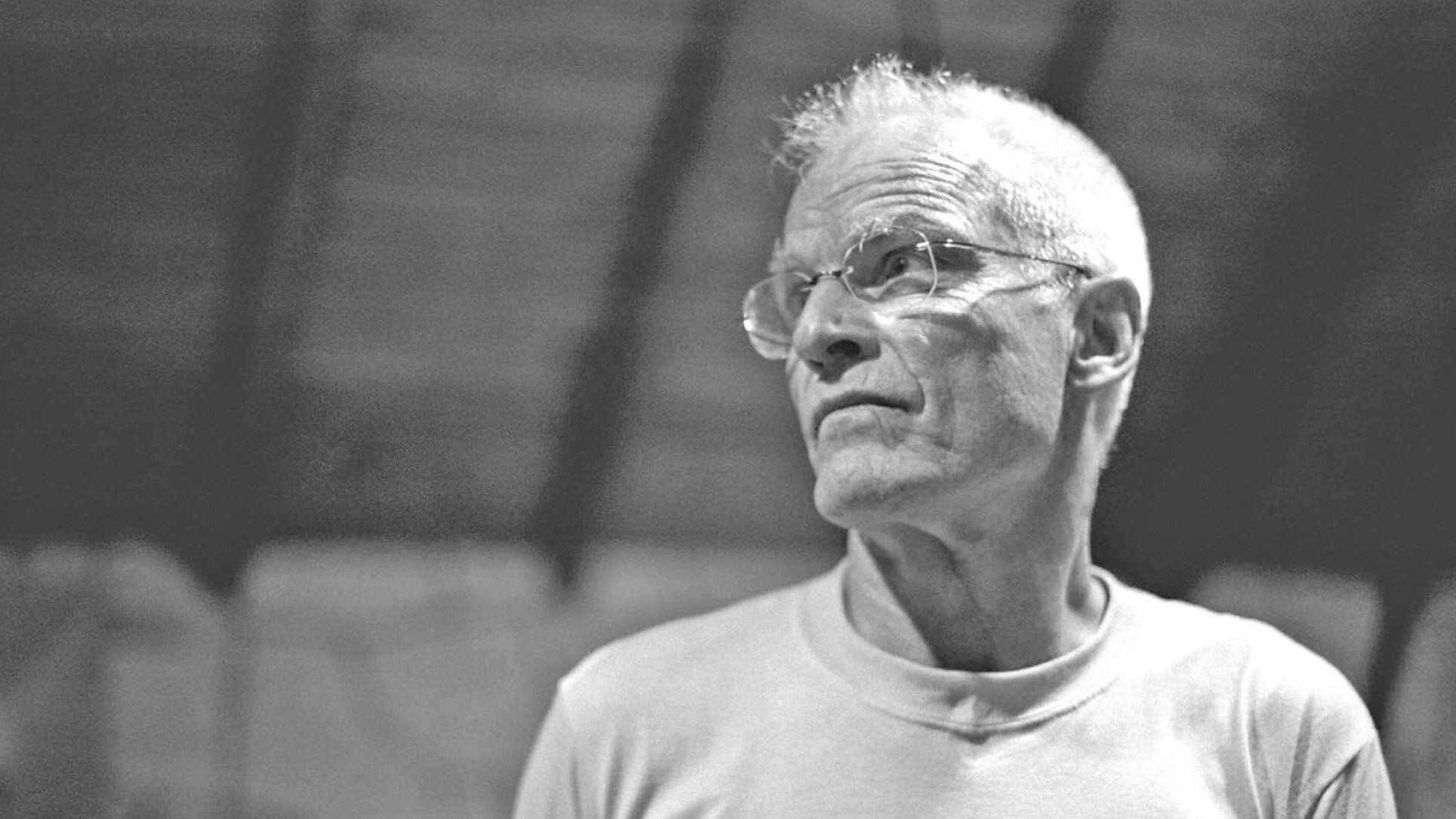
Editor’s Note: In our last issue, our unsung hero was a clown, sharing time with children and sick people to help them forget their pain and sorrows. This time, Michael Fuchs and Steffen Gill interviewed someone with a totally different activity: Vera Bohle, a German woman who disarms landmines. Yet, the attitude of both, and of many readers who gave us feedback, is not so different: Giving your life meaning and depth by thinking of others and their happiness more than your own is more fulfilling than anything else.
Translated by Anja Pahl, Edited by Claudia Balara
Ever since high school, I thought of working in International Aid in developing countries or as a foreign correspondent. Because television journalism always fascinated me, I studied theatre, film, and television, along with politics and geography. While studying, I worked as an editor for ZDF, one of Germany’s main TV stations, in various places, including Somalia. At the time, German soldiers were on foreign duty in Somalia, and ZDF was making a documentary about them. Because my assistance wasn’t required all day long—I mostly waited for material to edit—there was time to watch and think about things. You could see the refugee camp from the roof of the hotel; it was nearly at the walls of the hotel. There were no real tents, only a horrible stench, and dead people were carried out at regular intervals. It was such incredible misery that I felt completely uncomfortable in the role of a mere observer.
That was one of many key experiences I had during that time, which later determined my path. A wish just arose in me to be actively useful and directly improve the situation of these people. It became obvious that if I should be working in International Aid, then it would be in Refugee Aid. So I looked for a very concrete, technical application that would help people in crisis—after all, you cannot just go there and say, “I love you, everything is going to be okay.”
Because I was still in the middle of my studies, I forgot about this wish for a few years. But when I finished, everything happened very quickly to help me realize it. I started working for a well-known television station and had the option to go on foreign assignments. I always thought that it was important to really think things through, to come to a real conclusion. After a while, I started to wonder if I really wanted to do what I was doing. In all the reporting of crises, I asked myself more and more what positive thing one could really do for those caught in war zones.
So, in spite of a basically pacifist worldview, after the Kosovo conflict I had to acknowledge that in war zones the strong really do rule, and that one actually needs military intervention, in part, to break through this and stop anything worse from happening. But I could never have been a soldier! And what sort of thing can a woman do in war, without ignoring it on the one hand or justifying it on the other? I looked for an area in which I could be active but that would leave me the option of opposing war. After much thought, I decided that the best direction was in landmine disarmament. I could actively help and have a positive role. Of course, I know that if I make a mistake, it will affect me. But with each space we clear, a little bit of normality returns to the crisis zone, and that makes it worth it.
In the beginning, I did it all myself. Later, I taught the natives of the zone to do the same, supervised them, and developed programs for passing on the information. I was responsible for the organization HELP in Kosovo, for GTZ in Africa—in Mozambique and Zimbabwe—and ultimately for the United States of Afghanistan. There we mainly disarmed duds buried with the wide-ranging “cluster bombs” of the USA. These are one big bomb from which lots of little “bomblets” get thrown. They have a three-fold devastating action: they get through tank lines, set the whole environment burning, and kill people with their razor-sharp metal splinters. The biggest problem with the bombs is that there is an unusually high number of duds. The little bomblets can stay underground for years and put the civil population at great risk. Lots of children become human sacrifices because the scattered bomblets look like toys.
Since taking part in the Disarmament Conference in Geneva and realizing how long-winded all the official processes are while mines are still being laid and duds just lie around, it became even more clear that I should go back to my little minefield. To get better results, I would need to engage on a higher level, even if this work doesn’t bring the same immediate results as mine disarmament. I am probably not here to save the world—I cannot do that. But in my small way, where something can be achieved, I want to do something.
What are the important human qualities that one should develop so humankind can develop?
I believe that everyone should try to act positively in his or her own environment. Of course, in order to spread happiness and joy, you need to find it yourself first—and that is a pleasant job. Then, to avoid war, there should be more tolerance, peace, and equanimity. One shouldn’t solve a conflict by immediately using fists, machine-guns, or bombs. And on top of the ability to approach things with a bit of equanimity, the art of discussion should be practiced more often. If people can talk, then they won’t feel as if they have to strike out, except with words. It is much more difficult to fight with words than to hit someone, but that has to be our goal. Everyone can destroy, but building things and creating friendly structures of engagement is much more complicated. Women, especially, should choose to become qualified in conflict prevention, if they are inclined to work in war. For example, I would wish that more women have higher positions in NATO.
Have there been any magical moments in your work?
Yes, and it is sometimes strange how it happens. In the most dangerous work in mine clearing, you first need to test the area, because you never know exactly where the minefield begins. You might not pay attention for just a moment; and if you are unlucky, that is the moment you are standing on a mine. One day we were in a completely shot-covered area, and I went ahead alone. Just as I was going to step from the road to the field, a weird feeling came over me. I can hardly describe it, but as I stood there, completely awed, a butterfly came up to me. It flew around me once and then sat on my left foot. I got goose pimples and went back to the car, thinking “Vera, you need a vacation.” As I got to the car, we heard over the radio-link that two kilometers further along our area, just up the mountain, one of our colleagues had just stood on a mine and lost his foot. And even before they told us, I knew which foot. It was the left one.
“I am probably not here to save the world—I cannot do that. But in my small way, where something can be achieved, I want to do something.“
Vera Bohle, Landmine Disarmer
In March 1995, a German initiative for the prohibition of landmines began as part of the International Campaign to Ban Landmines (ICBL). This was supported by the Ottawa Agreement to ban anti-personal landmines and functions as a prohibition for all mines and for securing more voluntary help. In 1997, the ICBL was given a Nobel Peace Prize for this work. On March 1, 2004, the German initiative changed its name to Aktionsbuendnis Landmine.de. This is a political umbrella, to which sixteen organizations belong. The Aktionsbuendnis is responsible for the universalization of the Ottawa Convention, though up until now countries like Russia, China, the USA, and Finland have yet to join. In addition, the Aktionsbuendnis oversees whether the prohibition is actually being carried out, is active in United Nations disarmament talks, and lobbies in the Bundestag and the European Parliament. Between 1995 and 2002, the member organizations gave over eighteen million Euros in twenty-one countries to promote the cause of the Aktionsbuendnis. But it is just one drop on a hot stone. They estimate that 80 to 110 million landmines are not yet deactivated, and, as a result, more than twenty thousand human sacrifices happen each year, meaning that humanitarian help will still be needed for decades.
This is an excerpt from Michael Fuchs and Steffen Gill, Moderne Heldeni. Printed with permission from J. Kamphausen Publishing, Germany.